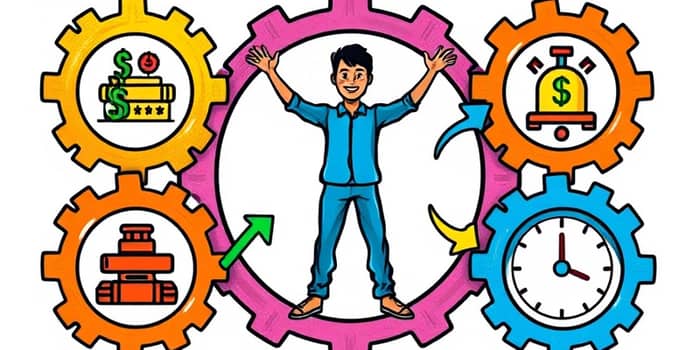
In an era of inflation, unpredictable markets, and rising living costs, one thing remains within your control: your own financial destiny. By reframing your money, time, and energy as parts of a cohesive system, you can become the CEO of your life’s finances and build a resilient and adaptable economic system.
What Is a Personal Economy?
A personal economy treats each individual as an economic unit with a balance sheet. It’s not just about income and spending—it’s about managing every resource you command: money, time, energy, knowledge, and relationships. Viewing your finances this way shifts you from a reactive spender to an active strategist.
At its core, a personal economy involves three stages: creating value, capturing value, and putting that value to work. You earn income or gain skills, allocate resources toward day-to-day needs and future goals, and then reinvest or protect your gains to secure long-term prosperity.
Why It Matters Today
Economic headlines—rising inflation, housing cost surges, and wage stagnation—often feel beyond your grasp. Yet, data reveals that many struggles stem from internal systems rather than external forces alone. Consider these findings:
- 45% of Americans say their income roughly matches expenses each month;
- 29% report expenses exceed income, forcing them to cut spending, dip into savings, or carry credit card debt;
- 60% feel higher prices compel tougher financial choices, and 76% are already trimming discretionary spending.
These pressures highlight one truth: you can’t change the global economy, but you can build buffers and strategies to thrive no matter what happens around you.
The Building Blocks of Your Personal Economy
Every steady system has vital signs. In your financial body, these are assets, debts, income, and expenses. Monitoring them shows you whether your personal economy is growing or contracting.
Net worth equals assets minus liabilities. Cash flow equals income minus expenses. Both are objective metrics that give you stunning clarity of your financial position.
Beyond these four, your personal economy relies on five main areas to function and grow:
- Income: diversifying sources—salary, freelance, investments—to reduce reliance on one stream.
- Spending: aligning daily habits with core values—home, family, growth—while cutting waste.
- Saving: building emergency and goal-specific funds to withstand shocks and seize opportunities.
- Investing: allocating capital into stocks, bonds, real estate, or business ventures to outpace inflation.
- Protection: insuring against major risks—health, disability, property—and planning your estate.
Common Weak Spots and Gaps
Many people know more about their favorite TV shows than their own net worth. Financial literacy remains low, with U.S. adults answering just 49% of basic money questions correctly. Gen Z scores only 38%, and Millennials 46%. Yet ignorance has a price: Americans lose over $1,000 per person each year to avoidable mistakes.
Furthermore, less than 60% of households have adequate emergency savings. When bills outpace income, 41% cut spending, 26% dip into savings, and 23% rely on credit cards. These coping strategies can derail long-term goals and trap individuals in cycles of debt.
Mapping and Managing Your System
Before you can optimize, you must measure. Begin by creating your personal balance sheet and cash flow statement. List assets and liabilities, categorize income sources and expense types. This foundation for long-term prosperity illuminates weak points and growth opportunities.
Tools you can use include spreadsheets, budgeting apps, and net worth trackers. Many offer features to forecast future balances, simulate investment growth, or model debt repayment schedules. Choose what feels intuitive and stick with it—consistency in tracking is key.
Running Your Personal Economy Like a Pro
Imagine steering a ship through turbulent waters. Your financial cockpit must have six controls: budget, emergency fund, debt plan, investment allocation, insurance coverage, and education. Adjust each control based on changing tides—job shifts, market cycles, life events.
Start by prioritizing high-impact actions. For most, that means:
- Building a three to six-month emergency fund;
- Paying off high-interest debt using debt avalanche or snowball methods;
- Automating savings and investments to remove friction;
- Reviewing insurance and estate plans yearly;
- Investing in your financial knowledge to sharpen decision-making.
By treating your finances as an interconnected system, you become nimble. When inflation spikes, you reroute budgets. When income falls, you renegotiate debt or explore side hustles. When markets soar, you rebalance investments. This adaptability transforms uncertainty into opportunity.
Becoming the CEO of Your Financial Future
At the end of the day, a personal economy is about agency. It’s about waking up confident that, regardless of what happens globally, you have the systems and skills to keep building wealth and security. Every decision—from cutting a recurring subscription to picking an investment strategy—advances your enterprise.
Start today by measuring one key metric: your net worth. Then choose one action: automate a new savings goal or refinance a high-rate loan. Small shifts compound rapidly. Before long, you’ll look back and see not just dollars and cents, but the empowered life you engineered for yourself. Take charge of your personal economy now, and secure the future you deserve.
References
- https://simplicable.com/economics/personal-economy
- https://maristpoll.marist.edu/polls/my-money-august-2025/
- https://dadsinbusiness.co.uk/blog/be-your-own-economy/
- https://www.bankrate.com/banking/savings/emergency-savings-report/
- https://spero.financial/understanding-the-four-pillars-of-personal-finance/
- https://corporatefinanceinstitute.com/resources/wealth-management/personal-finance/
- https://carry.com/learn/how-financially-literate-is-america-key-stats
- https://evalesco.com.au/what-is-your-personal-economy/
- https://www.tiaa.org/public/institute/publication/2025/financial-literacy-and-retirement-fluency-in-america
- https://sp.hsbc.com.my/liquid/5811.html
- https://www.worldbank.org/en/publication/globalfindex
- https://www.nefe.org/initiatives/ecosystem/default.aspx
- https://www.bluevine.com/blog/financial-literacy-statistics
- https://www.newyorklife.com/articles/what-is-personal-finance