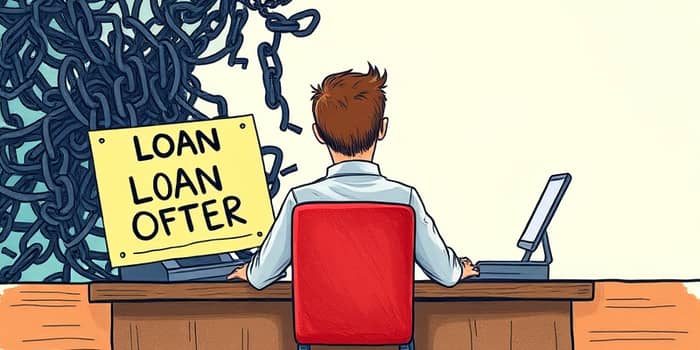
Taking on debt can be a crucial step toward achieving personal and financial goals. Yet not all loans are created equal. While some offer fair terms and manageable payments, others hide traps that can derail your financial future.
Knowing when to refuse a loan is just as important as knowing when to accept one. This article empowers you with the insights and true cost, risk, and terms to recognize a bad loan offer before it’s too late.
Understanding What Makes a Loan 'Bad'
A bad loan is more than just an expensive loan. It’s one where the misaligned with borrower’s needs often stems from predatory, deceptive, or unfair practices.
Lenders engaging in such tactics may impose hidden fees, obscure the true APR, or use high-pressure sales methods, all while showing no regard for your capacity to repay.
Embracing avoid debt traps and financial harm starts with recognizing these warning signs and making informed decisions.
Types of Loans Prone to Abuse
- Payday loans with triple-digit APRs and short repayment cycles
- Title loans secured by your vehicle, risking repossession
- High-cost installment loans with opaque monthly charges
- Merchant cash advances using factor rates instead of APR
- Rent-to-own and buy-now-pay-later deals with hidden markups
Each of these loan types can lead borrowers into a cycle of debt if the terms are not fully understood. Payday and title loans often impose astronomical interest, while merchant cash advances and rent-to-own schemes obscure their real cost in confusing fee structures.
Interest Rate & Cost Red Flags
One of the clearest signs of a bad loan is the presence of extremely high interest rates, typically far above market norms. Any offer with a triple-digit APR should raise immediate concern.
Watch for costs expressed as flat fees, factor rates, or monthly charges rather than a transparent APR. These disguises can mask the true expense of borrowing.
Comparing multiple quotes and researching average rates for your credit profile helps you avoid shock when payments arrive.
Transparency & Documentation Red Flags
If you cannot explain it back in your own words, you should not sign. A reputable lender provides clear, written documentation of:
- Interest calculation method
- Exact APR and total repayable amount
- Payment schedule and any variable rate triggers
Any vagueness or refusal to provide a full fee breakdown is a sign to walk away.
Process & Behavior Red Flags
Lenders who use high-pressure tactics or try to rush your decision are often hiding unfavorable terms. If you find yourself feeling rushed, confused, or pushed, that’s a critical warning.
Other behavioral red flags include:
- No credit checks for guaranteed approval pitches
- Aggressive marketing through constant calls or texts
- Encouragement to omit or falsify information on applications
All these point to an unethical lender more focused on profit than your well-being.
Structural Term Red Flags
Certain contractual structures are designed to ensnare you in a debt trap:
- Balloon payments that leave a large lump sum due at the end
- Serial refinancing or loan flipping, increasing cost over time
- Small loans backed by high-value collateral, risking major loss
Understanding these features can help you avoid loans that look manageable at first but become unsustainable.
Who Predatory Lenders Target
Predatory lenders intentionally seek out the most vulnerable borrowers. Their typical targets include:
- Individuals with poor or thin credit histories
- People facing financial emergencies like medical bills or eviction
- Low-income or underbanked consumers with few alternatives
- Immigrants and non-native speakers unfamiliar with jargon
- Small business owners with cash-flow gaps
Recognizing these tactics helps you understand why you might be more at risk than you realize and how to protect yourself.
Know Your Rights and Local Rules
Federal and state regulations exist to protect you from abusive lending. Interest rate caps and usury laws limit maximum APRs, while Truth in Lending–style rules mandate clear APR disclosure and total cost statements.
Consumer protection laws also prohibit deceptive advertising, loan packing, and unauthorized fees. If a lender violates these standards, you may have legal recourse to challenge unfair or misleading practices.
Conclusion: Empowering Your Financial Decisions
Walking away from a bad loan offer can feel daunting, especially in times of need. Yet saying “no” to predatory terms today can mean the difference between financial security and a debt cycle.
Trust your instincts, do your research, and remember that you have the power to choose. When in doubt, walk away and protect yourself, then explore alternatives like credit unions, community lenders, or borrowing from trusted friends and family.
Your financial health is worth guarding. With awareness and due diligence, you can secure loans that serve your goals rather than undermine them.
References
- https://www.crestmontcapital.com/blog/what-makes-a-loan-offer-predatory-key-signs-to-watch-for
- https://finezza.in/blog/red-flags-loan-officers-monitor-in-bank-statements/
- https://www.experian.com/blogs/ask-experian/lender-red-flags-to-look-out-for/
- https://icbsd.com/application-red-flags-how-to-prevent-financial-fraud/
- https://www.inscribe.ai/blog/12-common-red-flags-for-loan-application-fraud
- https://www.ncontracts.com/nsight-blog/8-flags-fair-lending-risk
- https://www.aba.com/news-research/analysis-guides/fair-lending-red-flags
- https://www.rmahq.org/blogs/2025/identifying-troubled-loans-early-five-practical-reads-for-banks/?gmssopc=1
- https://www.fincen.gov/resources/advisories/fincen-advisory-fin-2012-a009
- https://bonditglobal.com/spot-credit-risk-red-flags-early/