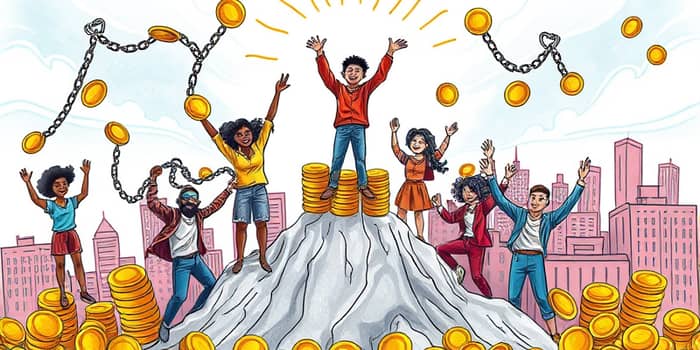
In an age where a handful of individuals hold vast fortunes while millions struggle to meet basic needs, financial freedom starts with awareness. The contrast between the booming wealth of billionaires and the daily anxieties of average families is stark and growing. Understanding this disparity is the first step toward reclaiming control of our own financial destinies and pushing for a more equitable future.
Recent reports reveal that billionaire wealth surged by $2.5 trillion in 2025, growing three times faster than the average annual gains of the prior half-decade. Meanwhile, 32% of Americans believe their personal finances will worsen in the coming year, marking the highest level of consumer pessimism since 2018. The urgency to address these challenges has never been greater.
Understanding the Inequality Paradox
Wealth concentration has reached unprecedented levels. Today, the top 1% controls 37% of global wealth, while the bottom half of the population holds a mere 2%. Such extremes distort opportunities and undermine social cohesion, creating headaches for households and national economies alike.
Regional disparities only amplify the divide. Residents of North America and Oceania possess over sixteen times the wealth of individuals in Sub-Saharan Africa. This gulf shapes access to education, healthcare, and political influence, reinforcing generational barriers.
The consequences extend far beyond bank statements. Excessive concentration of resources gives disproportionate political leverage, with billionaires being over 4,000 times more likely to hold office than ordinary citizens. This shapes tax laws, regulatory frameworks, and even digital platform ownership, tilting playing fields in favor of the ultra-wealthy.
Facing Personal Financial Challenges Head-On
On the home front, Americans confront stubborn inflation, a stagnant median income, and rising debt burdens. With prices climbing roughly 25% since 2020, many families find themselves scrambling to cover essentials while saving little for emergencies.
Financial stress also impacts mental and physical health. Chronic worry over bills and debt can lead to anxiety, disrupted sleep, and strained relationships. Recognizing the emotional toll is crucial, as rebuilding confidence and resilience becomes part of the journey.
- High inflation remains the leading concern for 78% of consumers
- Stagnant or reduced income impacts 46% of households
- Credit card and auto loan debt weigh heavily on 100 million Americans
- Poor retirement savings leaves 50% of adults without any nest egg
Such pressures fuel pessimism: only 34% of Americans expect their financial situation to improve in 2026, and nearly half of credit card users carry balances at 20% APR or higher. Urgent action is needed to reverse these trends.
Building Your Path to Financial Freedom
While structural inequality demands systemic solutions, individual strategies can empower us personally. Establishing solid financial habits lays the foundation for long-term stability and growth, even amid broader uncertainties.
- Create a realistic budget tracking every dollar
- Build or bolster an emergency savings fund
- Employ the debt snowball or avalanche method
- Invest consistently through diversified portfolios
- Boost your earning potential with new skills
Begin with budgeting: record income, fixed expenses, and variable costs. Simple spreadsheets or free apps can help you visualize spending patterns and identify areas to cut back. Next, aim to save at least $1,000 in a dedicated emergency account, gradually growing this buffer to three to six months of living expenses.
As debt repayments become manageable, tackle high-interest credit cards first. The debt snowball method focuses on quick wins by paying off smaller balances before moving to larger ones, building momentum and motivation along the way. Alternatively, the avalanche approach saves more on interest by addressing highest APR debts first.
In addition to budgeting and debt management, consider automating key financial tasks. Setting up automatic transfers to savings and investment accounts removes temptation and builds discipline. Over time, these small automated actions compound into substantial wealth growth.
Once debt is under control, shifting even modest amounts into retirement and investment accounts can leverage compound growth over time. Whether through employer-sponsored plans, low-cost index funds, or micro-investing platforms, the key is consistency and patience. Finally, consider expanding your skill set to pursue higher-paying roles or entrepreneurial ventures, unlocking additional income streams and opportunities.
Investing in yourself yields the highest returns over a lifetime. Online courses, certifications, and workshops can open doors to career advancement and new revenue sources, fueling both financial and personal growth.
Harnessing Collective Power for Systemic Change
Individual action alone cannot dismantle the machinery of extreme wealth concentration. Collective efforts to advocate for fair taxation, corporate accountability, and inclusive policies are essential. Civic engagement amplifies our voices and demands that elected officials address the root causes of inequality.
Policy triumphs remind us that progress is possible. Nations that implemented progressive tax reforms, stronger antitrust regulations, and improved social safety nets have seen more balanced growth and higher rates of upward mobility. Championing similar measures at local and national levels can reshape the economy for the better.
Grassroots movements and community organizations provide platforms to educate others, propose policy reforms, and build solidarity. By joining coalitions focused on wealth taxes, closing loopholes, and increasing transparency of political donations, citizens help ensure that economic structures serve the many, not just the few.
Your Call to Action
Every journey toward financial liberation starts with a single step. Evaluate your current situation honestly, set realistic milestones, and celebrate each win. Share your progress with friends, join support networks, and keep learning. By staying informed and proactive, you transform uncertainty into opportunity.
Together we can break free from financial constraints and build a world where prosperity is shared. Let today be the day you unleash your wealth potential and contribute to a future beyond inequality. The path is challenging, but with determination and collective effort, true financial empowerment is within reach.
References
- https://mbmca.com/2026/01/20/global-billionaire-wealth-surges-as-inequality-widens-new-report-finds/
- https://www.bankrate.com/banking/financial-outlook-survey/
- https://www.oxfam.org.uk/get-involved/campaign-with-oxfam/fight-inequality/oxfams-global-inequality-report/
- https://www.statista.com/statistics/1173591/opinion-personal-financial-situation-past-year-age-us/
- https://wir2026.wid.world/insight/global-economic-inequity/
- https://www.youtube.com/watch?v=67H39GObgAI
- https://www.visualcapitalist.com/how-billionaires-plan-to-invest-in-2026/
- https://newsroom.wf.com/news-releases/news-details/2026/Setting-New-Financial-Goals-Feels-Powerful-Sticking-to-Them-Can-Be-Tough/default.aspx
- https://www.msci.com/research-and-insights/research-reports/2026-wealth-trends
- https://www.axios.com/sponsored/5-financial-trends-you-can-bank-on-in-2026
- https://devere-investment.com/silent-migration-to-define-2026-as-wealth-shifts-quietly-reshape-global-investment-flows/
- https://www.fisherinvestments.com/en-us/insights/market-commentary/refresh-your-personal-finances-for-2026
- https://peoplesdispatch.org/2025/12/18/half-of-the-worlds-population-owns-just-2-of-global-wealth-un-report-finds/
- https://www.investmentnews.com/practice-management/americans-aim-high-financially-in-2026-but-sticking-to-plans-may-be-the-real-test/263708
- https://altrata.com/reports/investable-assets-of-the-global-wealthy