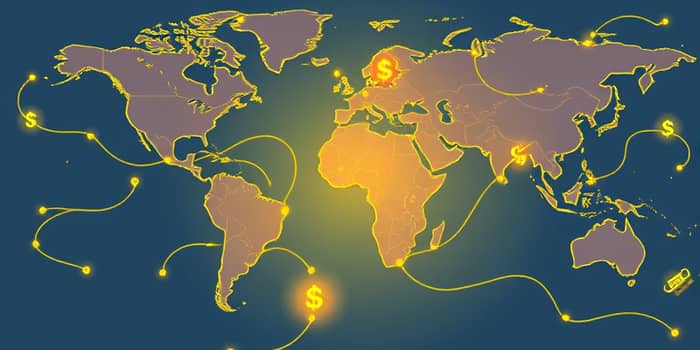
Imagine a world where wealth flows like a mighty river, carving paths through economies and connecting distant shores. This is the essence of capital flows, a powerful force that drives global prosperity and opportunity.
At its heart, capital flows represent the movement of money for investment, bridging gaps between nations and fueling growth. Understanding this dynamic is not just for economists; it's a tool for anyone seeking to navigate the financial world with confidence.
From boosting local businesses to influencing exchange rates, these flows touch every aspect of our lives, offering a window into the interconnectedness of our global community. They are the invisible threads weaving together savings and dreams across borders.
In this detailed guide, we will unravel the complexities of capital flows, providing you with practical knowledge to inspire smarter decisions and foster a deeper appreciation for the wealth dynamics that shape our world.
What Are Capital Flows?
Capital flows are the transfer of financial assets across international boundaries, appearing in the financial account of a country's balance of payments. They reflect how money enters and exits economies, driven by the pursuit of better returns or safer havens.
This movement links capital-abundant regions with those hungry for development, creating a web of economic interdependence. By grasping this concept, you can anticipate market trends and align your strategies with global currents.
- Inflows: When foreign capital enters a country, such as through asset purchases or loans, boosting local markets.
- Outflows: When domestic capital leaves to seek opportunities abroad, reflecting shifts in economic attractiveness.
Understanding these flows empowers you to see beyond national borders and recognize the fluid nature of modern finance.
Types of Capital Flows
Capital flows come in various forms, each with unique characteristics and impacts on economies. Knowing the differences helps in assessing risks and opportunities.
- Foreign Direct Investment (FDI): Long-term investments in physical assets like factories, offering stability and control, often driving job creation and technology transfer.
- Foreign Portfolio Investment (FPI): Short-term investments in stocks and bonds, providing liquidity but prone to volatility, sensitive to market sentiments.
- Other forms include external loans, banking capital, and internal corporate investments, each playing a role in financial ecosystems.
FDI builds foundations for sustainable growth, while FPI can inject quick funds but requires careful management to avoid disruptions.
Key Characteristics of Capital Flows
Capital flows exhibit defining traits that influence their behavior and global impact. Recognizing these can help you navigate their ebb and flow.
- They are bidirectional in nature, with inflows and outflows mirroring economic attractiveness and investor confidence.
- Volatility is high, especially in short-term "hot money" flows that react swiftly to interest rate changes or political events.
- Sensitivity to interest rate differentials drives capital toward higher yields, shaping global investment patterns.
- Dependence on economic fundamentals like growth ensures flows align with long-term stability and potential.
- Distinction between short- vs. long-term flows highlights the stability of FDI versus the agility of FPI.
- Impact on liquidity and inflation dynamics means inflows can expand money supply, requiring central bank interventions.
- Influence of global sentiment shifts moves capital between risk-on emerging markets and risk-off safe havens.
- An emergent property from interactions underscores the human element in financial systems, beyond simple transactions.
These characteristics make capital flows a dynamic force, requiring vigilance and adaptability from all participants.
Drivers Behind Capital Flows
Several factors determine the direction and volume of capital flows, shaping global financial movements. By monitoring these, you can better predict where wealth will flow next.
- Interest rate differentials attract capital, as investors seek higher returns in favorable environments.
- Exchange rate expectations draw flows, with anticipated appreciation boosting foreign investment confidence.
- Growth prospects and political stability are magnets for capital, signaling safe and profitable opportunities.
- Global liquidity conditions influence availability, with policies like quantitative easing increasing cross-border movements.
- Risk and geopolitics redirect flows, such as during crises, pushing money toward safer assets like U.S. Treasuries.
Understanding these drivers equips you to anticipate changes and position yourself advantageously in the market.
Micro and Macro Dynamics
Capital flows affect economies at both micro and macro levels, with complex interactions that transform societies. The micro dynamics focus on firms and households, while macro dynamics shape national policies.
On the micro side, the supply channel lowers capital costs, encouraging firms to invest and expand, particularly in sectors like metal production with high capital elasticity.
The demand and consumption channel dominates, as inflows boost household spending, reallocating resources to services and driving firm entry and growth.
Resource reallocation tends toward services due to non-homothetic preferences, enhancing productivity, especially in capital-scarce economies that liberalize.
These dynamics illustrate how capital flows can ripple through economies, creating opportunities for innovation and prosperity.
Benefits of Capital Flows
When managed effectively, capital flows offer numerous advantages that foster global and local economic health. Embracing these benefits can inspire confidence in financial integration.
- Efficient global resource allocation smoothes growth across nations, reducing disparities and promoting shared prosperity.
- Market deepening and increased liquidity from FPI enhance financial stability and access for investors.
- Job creation and income generation through FDI build sustainable communities and boost local economies.
- Tax revenue and foreign reserve gains provide governments with resources for public services and development.
- Firm expansion along intensive and extensive margins drives innovation and competitive markets.
These benefits highlight the positive role capital flows play in connecting dreams and resources across the globe.
Risks and Challenges
Despite their advantages, capital flows come with significant risks that require careful management. Awareness of these challenges empowers you to mitigate potential downsides.
- Instability and asset bubbles can lead to financial crises, disrupting economies and eroding wealth.
- The policy trilemma poses trade-offs between exchange stability, monetary autonomy, and capital mobility, complicating governance.
- Boom-bust cycles driven by sentiment cause medium-term deviations, amplifying volatility beyond business cycles.
- Sudden reversals or capital flight trigger currency swings, challenging policymakers and investors alike.
Tools like sterilization and macroprudential measures help manage these risks, ensuring sustainable growth and resilience.
Practical Insights for Empowerment
Understanding capital flows can transform your approach to finance, offering actionable strategies for individuals and businesses. Apply this knowledge to navigate the global landscape with agility.
Track global trends using data from sources like the IMF, which provides real-time insights into capital movements. Look for patterns in interest rates, political events, and economic indicators to forecast shifts.
For investors, consider diversifying across regions to hedge against volatility. Focus on countries with strong fundamentals and stable policies to attract long-term capital and secure returns.
Businesses can leverage FDI opportunities by positioning themselves in growth sectors or partnering with foreign investors. Stay informed about exchange rate risks and global liquidity conditions to optimize operations.
By embracing these insights, you can turn the dynamics of capital into a source of empowerment, driving personal and professional success in an interconnected world.
Conclusion: Embracing Wealth Dynamics
Capital flows are more than financial transactions; they are a reflection of our shared humanity and aspirations. By understanding their flow, you can better anticipate changes, seize opportunities, and contribute to a more prosperous global economy.
Let this knowledge inspire you to explore further, stay informed, and participate actively in the wealth dynamics that define our times. Embrace the river of capital as a force for good, shaping a future where resources flow to where they are needed most.
Together, we can navigate these currents with wisdom and purpose, building a world where wealth dynamics uplift all.
References
- https://www.tradingview.com/chart/EURUSD/nBNietB4-Capital-Flows-Concept-and-Characteristics/
- https://www.simplilearn.com/capital-flows-rar206-article
- https://fiveable.me/key-terms/ap-macro/capital-flow
- https://lopsiii.com/2022/03/13/an-introduction-to-capital-flow/
- https://www.youtube.com/watch?v=bU2igZLn-GQ
- https://blogs.worldbank.org/en/allaboutfinance/unveiling-capital-flow-dynamics--beyond-the-traditional-business