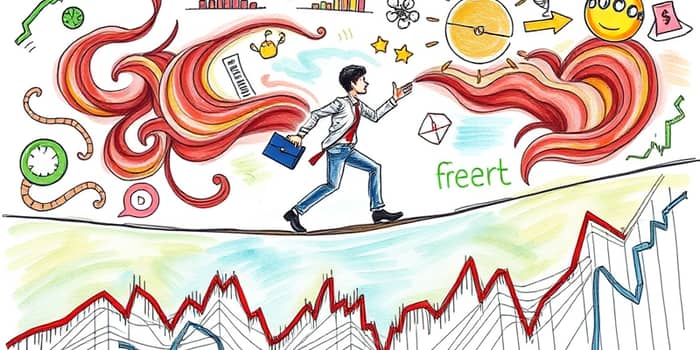
In the world of finance, the most crucial battles are often fought within the mind rather than on trading floors. While charts, indicators, and fundamental analysis provide frameworks, it is the interplay of fear, greed, overconfidence, and regret that ultimately determines whether your decisions yield profit or trigger losses. By confronting these hidden emotional drivers head-on, you lay the groundwork for sustainable success and resilience in the markets.
This article dives into the core principles of trading and investment psychology, contrasts the rapid-fire mentality of traders with the patient conviction of investors, explores common emotional pitfalls and cognitive biases, and presents proven methods for achieving mindset mastery. Through a combination of research-backed insights, real-world statistics, and actionable strategies, you will gain a roadmap to emotional self-awareness and learn how to transform obstacles into opportunities.
Understanding Trading and Investment Psychology
Before diving into strategies, recognize that emotions like fear and greed frequently overpower rational analysis. A single fear-driven sell order can wipe out gains earned by months of disciplined investing, while a surge of greed may lure you into chasing overvalued assets.
This interplay between emotion and cognition means developing emotional discipline over impulse is just as vital as mastering technical indicators or fundamental analysis. Psychology shapes every decision, often in ways you don’t immediately notice.
Over many cycles, investors who succumb to panic or get lured by adrenaline-driven trades often underperform those who remain detached. Embracing techniques to monitor your emotional state—like mindfulness exercises or pre-trade checklists—can help you stay aligned with core investment principles under pressure and avoid costly mistakes.
Trader vs. Investor Mindsets
While traders and investors share the same markets, they approach them with contrasting temperaments. Traders thrive on fast-paced environments, seeking volatility and rapid returns. Investors, on the other hand, prioritize patience, conviction, and the power of compounding over years or decades.
Traders often experience adrenal highs during volatile moves, but this stimulation can lead to excessive risk-taking and burnout. Investors tend to weather short-term fluctuations, focusing on research and long-term value. Neither mindset is inherently superior; success demands emotional alignment with your chosen path.
Consider the Olympic analogy: bronze medal winners often report more satisfaction than silver medallists because they celebrate what they achieved, while silver medallists fixate on regret at having missed gold. Traders must learn to celebrate partial wins and accept small setbacks, whereas investors use patient, conviction-led decision frameworks to remain calm during turbulence.
Common Emotional Pitfalls and Cognitive Biases
Emotional pitfalls such as panic selling triggered by loss aversion, and reckless buying driven by fear of missing out, consistently undermine performance. Regret can spawn revenge trading, while overconfidence after a winning streak often leads to impulsive bets and overtrading.
Cognitive biases further distort your perception of market signals. Confirmation bias makes you ignore data that contradicts your thesis. Recency bias tempts you to extrapolate short-term trends into the future. Herd mentality pushes you to follow the crowd, even when fundamentals disagree.
For example, a trader filled with regret after a missed breakout might engage in revenge trading to recover losses, only to exacerbate drawdowns. An investor gripped by herd mentality may pour capital into a hot IPO blind to valuations. Recognizing these cycles empowers you to pause, reflect, and make decisions that align with clear long-term wealth-building objectives.
Behavioral Finance: The Discipline Equation
Behavioral finance research estimates that trading and investing success comprises 80% emotional discipline, 20% strategy. Most losses stem from poor decision-making rather than adverse market moves.
Understanding that the market remains neutral—neither friend nor foe—helps you detach personal feelings from profit and loss. When you view losses as business expenses, you avoid taking them personally and learn valuable lessons instead.
Remember that the market’s neutrality means price movements are not personal judgments on your abilities. By framing each trade as a statistical opportunity rather than a reflection of self-worth, you free yourself from the emotional burden of both wins and losses, fostering consistent, rule-based investment plans.
Strategies for Mindset Mastery
Building a resilient investment mindset requires deliberate practice and structured processes. Over time, these techniques can neutralize destructive emotions and reinforce disciplined habits.
- Trading Journal: Maintain detailed records to identify patterns and emotional triggers over time and refine your decision-making.
- Rule-Based Systems: Adopt an algorithm-driven approach that removes emotion from entries and exits, such as the Stressless Trading Method.
- Risk Management: Implement strict risk management (small loss limits) to preserve capital and prevent catastrophic drawdowns.
- Discipline Techniques: practice patience, avoid herd mentality, and diversify holdings to counter FOMO and the lottery effect.
Implement these tools with discipline and track performance over time. Consider leveraging software that logs your trades automatically and sends alerts when you deviate from your rules. Pairing up with a mentor or accountability group can further cement responsible trading behaviors over time and reduce emotional drift.
Cultivating a Winning Mindset
To excel, embrace the reality that you will be wrong frequently. Adopting healthy confidence without hesitation allows you to follow your plan even when doubt creeps in. Over time, each disciplined decision builds trust in your process.
View each trade as an isolated event driven by probabilities, not personal validation. When you treat the market as a neutral arena, you reduce emotional reactivity and seize opportunities with clarity.
Another powerful habit is ending each trading or investing day with a gratitude log. Recording small wins and insights builds positive reinforcement loops, helping you replace negative self-talk with confidence in your disciplined process.
Real-World Impacts and Final Reflections
Emotional reactions and impulsive behaviors can erode long-term wealth. Anecdotes and studies alike highlight how panic sellers often miss the strongest market rebounds, while those with long-term perspective fosters emotional resilience ride out storms and profit from downturn recoveries.
Over the past five years, a randomly chosen stock from the S&P 500 carried a 37% chance of losing money, compared with just 1% for diversified funds. This stark divergence underscores how single-stock speculation fueled by FOMO or overconfidence often results in underperformance and stress.
By integrating self-awareness, disciplined routines, and evidence-based strategies, you anchor your investing journey to sound principles. Armed with emotional insight, disciplined frameworks, and a commitment to continuous learning, you can navigate markets with poise. Let each setback teach you, each win reinforce your habits, and every moment of doubt become an invitation to practice patience. In mastering these elements, you step onto the path of true investing excellence.
References
- https://www.home.saxo/learn/guides/market-volatility/what-is-trading-psychology-and-why-does-it-matter
- https://www.mnclgroup.com/psychology-of-a-trader-and-an-investor
- https://www.blackrock.com/za/professionals/education/psychology-of-investing
- https://www.dozendiamonds.com/psychology-of-profit-stressless-trading-method/
- https://corporatefinanceinstitute.com/resources/career-map/sell-side/capital-markets/winning-mindset-of-a-trader/
- https://www.youtube.com/watch?v=6QtPUDCYCOQ
- https://blog.siebert.com/the-psychology-of-wealth-how-your-money-mindset-shapes-your-future
- https://visionarymind.me/p/the-psychology-of-profit-mastering-your-investment-mindset/