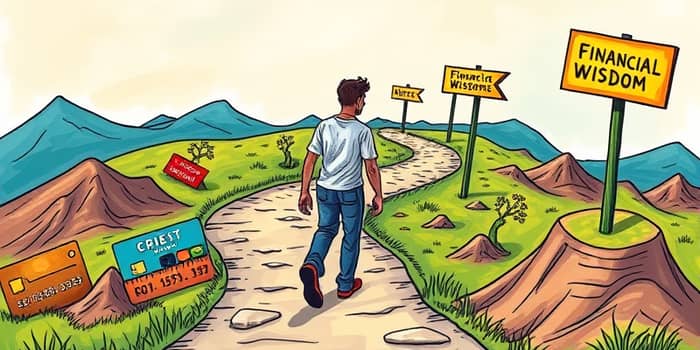
Credit management can feel like navigating a maze filled with hidden traps. As U.S. credit card debt surpasses $1.2 trillion and interest rates rise, consumers face unprecedented challenges.
Yet with clear strategies and timely actions, you can steer clear of common dangers and build a resilient financial future.
Understanding the Roots of Credit Trouble
Before you can avoid pitfalls, you must recognize their origins. Financial distress often begins with small missteps that compound over time.
Late or missed payments can immediately damage your score and trigger late fees. Similarly, carrying more than 30% of your available credit can send warning signals to lenders.
- Late or missed payments destroy credit scores.
- Maxed-out cards increase risk and reduce scores.
- Continuously carrying a balance incurs high interest.
- Multiple applications lead to hard inquiries.
- Closing old accounts shortens credit history.
- Ignoring report errors allows fraud to persist.
Fundamentals of Sound Credit Management
Adhering to core principles can protect you from common mistakes.
Paying the balance in full each month avoids interest charges and demonstrates fiscal responsibility. If full payment isn’t possible, always pay more than the minimum to reduce your principal.
Below thirty percent utilization of your credit line is ideal. Splitting purchases across multiple cards can help keep individual balances low, but be mindful not to open accounts solely for additional limits.
Set up autopay or reminders to ensure you never miss a due date. If you do fall behind, contacting lenders immediately can often result in a revised payment plan rather than default.
Interpreting Credit Reports and Rebuilding Your Profile
Regularly reviewing your credit reports can uncover mistakes or fraudulent activity. Dispute any inaccuracies promptly to prevent unnecessary score declines.
Alternative financial services—like payday loans—often carry exorbitant fees and can perpetuate cycles of debt. Seek mainstream credit options wherever possible.
Rebuilding damaged credit requires patience and consistent effort. Use either the “snowball” method (tackling small balances first) or the “avalanche” method (prioritizing high-interest debts).
Consistent payments over time gradually restore your creditworthiness. Consider credit-builder loans or secured cards if traditional accounts remain out of reach.
Current Economic Realities and Demographic Challenges
In 2025, tightening credit standards and recessionary risks loom large. Lenders are more cautious, especially with non-prime and subprime borrowers.
The impact of rising interest rates amplifies the cost of revolving debt. Consumers with high balances may find themselves trapped by compounding charges.
Alternative credit data serves 45 million Americans lacking traditional histories, but reliance on these high-cost products often deepens financial hardship.
Socioeconomic disparities persist: low-income and minority communities disproportionately turn to alternative services, facing greater delinquency and reduced access to mainstream credit.
A Practical Checklist for Financial Resilience
Embed these actions into your routine to maintain a healthy credit profile.
- Pay all bills on time through autopay or alerts.
- Keep utilization well below 30% of total credit.
- Avoid impulse credit applications and unnecessary inquiries.
- Regularly review reports and dispute any errors.
- Address delinquencies immediately with lenders.
Conclusion
Building and preserving strong credit is a journey, not a sprint. Along the way, vigilance, education, and disciplined habits will protect you from pitfalls and empower you to seize future opportunities.
By following evidence-based strategies and remaining mindful of economic shifts, you can walk the prudent path toward long-term financial freedom and security.
References
- https://javelinstrategy.com/research/seven-credit-card-warning-signs-2025-dont-stop-lending-watch-out
- https://www.clemson.edu/financial-aid/how-aid-works/financial-wellness-resources/credit-management.html
- https://www.creditorsbar.org/news/q1-2025-credit-card-charge-offs-and-delinquencies-show-slight-reduction
- https://www.fswb.bank/about/five-tips-for-improving-your-credit-score
- https://www.vacu.org/learn/credit-building/8-ways-to-improve-your-credit-score
- https://papers.ssrn.com/sol3/papers.cfm?abstract_id=5262439
- https://www.experian.com/blogs/ask-experian/credit-education/improving-credit/improve-credit-score/
- https://www.bannerbank.com/financial-resources/blog/improve-your-credit-score
- https://www.moodys.com/web/en/us/insights/credit-risk/outlooks/credit-risks-for-2025.html
- https://www.consumerfinance.gov/ask-cfpb/how-do-i-get-and-keep-a-good-credit-score-en-318/
- https://www.lendingtree.com/credit-cards/study/credit-card-debt-statistics/
- https://www.consumerfinance.gov/data-research/consumer-credit-trends/
- https://www.aba.com/advocacy/community-programs/consumer-resources/calculators/improving-your-credit-score
- https://risk.lexisnexis.com/insights-resources/infographic/credit-trends
- https://www.guidestone.org/Resources/Education/Articles/Retirement/How-to-Build-Your-Credit-Score