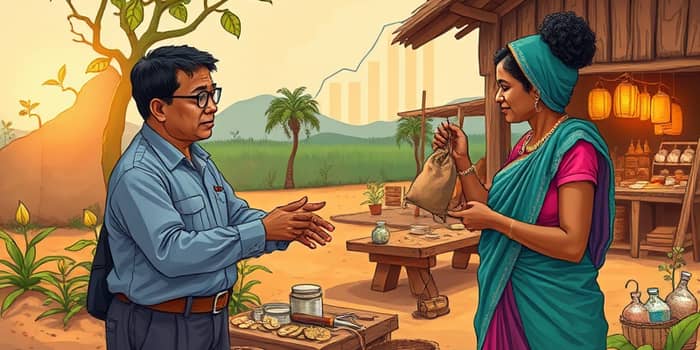
Across developing economies and underserved communities, individual loans unlock hidden potential by bridging gaps in finance for households, workers, and very small firms. From the dusty alleys of informal markets to the bustling streets of urban centers, these loans ripple through microeconomic landscapes, shaping consumption, investment, labor supply, entrepreneurship, and overall welfare.
This article dives deep into the mechanisms, evidence, and real-world implications of microcredit and small consumer loans. We examine how small loan sizes with short maturities can transform—or modestly supplement—the economic lives of marginalized borrowers.
Defining Individual Loans and Their Scope
At its core, microcredit provides financial access to excluded households lacking collateral or credit histories. Typical features include:
- Loan sizes ranging from a few hundred to a few thousand dollars
- Short maturities, often under three years
- Weekly or monthly repayments, frequently in group lending arrangements
- Effective interest rates higher than traditional banking due to high administrative cost per dollar lent
By contrast, standard personal loans serve middle-income borrowers with larger amounts, longer terms, and lower rates. Both instruments influence household behavior but operate in distinct segments of the financial ecosystem.
Global Reach and Market Evolution
Since the 1990s, microcredit has evolved into a global phenomenon with a portfolio exceeding USD 100 billion. Institutions from NGOs to major banks now vie for market share, sparking debates over mission drift and over-indebtedness risks.
Commercialization has ushered in new pressures:
- Higher expectations for quarterly returns among private investors
- Expansion into digital lending platforms to reduce costs
- Innovations in credit scoring for previously unbanked clients
Understanding these trends is essential for policymakers and practitioners aiming to balance profitability with social impact.
Mechanisms Driving Microeconomic Change
Individual loans affect economies through multiple channels. Five core mechanisms emerge from theoretical and empirical work:
- Investment in productive assets and entrepreneurship—borrowers acquire tools, inventory, or livestock, enabling business creation or expansion.
- Household consumption smoothing and risk management—credit buffers against shocks, reducing the need to sell assets.
- Labor supply and employment shifts—families adjust wage work versus self-employment, sometimes reshaping informal labor markets.
- Human capital investments—loans finance education or health expenses, though repayment stress can also pressure families to cut back.
- Intra-household allocation and gender dynamics—targeting women often aims at empowerment, yet control over resources varies by context.
Beyond household finance, these channels generate aggregate microeconomic outcomes like consumption volatility, local price adjustments, and competition among microenterprises.
Evidence from Impact Studies
A wealth of randomized controlled trials across Mexico, India, the Philippines, Ethiopia, and beyond offers nuanced insights. A Bayesian hierarchical meta-analysis (Meager, 2019) finds:
Key takeaways include:
1. No transformative effect on average: Most households see modest gains, with substantial probability of near-zero impact.
2. Heterogeneity by prior experience: Established entrepreneurs tend to benefit more than novices, suggesting credit alone does not create success where skills are absent.
3. Economic environment matters most: Local demand conditions and interest rates drive outcomes more than program design nuances.
Practical Implications for Borrowers and Policymakers
While the average impact is modest, individual stories of transformation are powerful. To maximize benefits and minimize risks, consider these strategies:
- Align loan size and term with clear business plans or consumption goals
- Combine credit with training in financial management and marketing
- Encourage group support networks to share risk and accountability
- Monitor local market conditions to avoid oversaturation of similar ventures
- Design gender-sensitive approaches to ensure true control by female borrowers
Policymakers should foster an enabling environment by regulating interest rates thoughtfully, promoting transparency, and supporting microcredit plus services—integrated packages that include training, savings, and insurance.
Conclusion
Individual loans are not a magic bullet for poverty eradication, but they play a pivotal role in the mosaic of development finance. By expanding options modestly across settings, they empower capable entrepreneurs, smooth consumption in times of need, and inject dynamism into local economies.
For borrowers, a judicious approach—pairing credit with skill building and market awareness—can tip the balance toward sustainable growth. For institutions and regulators, maintaining a commitment to social missions while upholding financial discipline is key to ensuring that microcredit continues to be a force for progress rather than a source of undue burden.
Ultimately, the microeconomic impact of individual loans lies in their capacity to weave threads of opportunity through the fabric of daily life, helping households and small firms chart resilient paths toward better futures.
References
- https://en.wikipedia.org/wiki/Impact_of_microcredit
- https://microeconomicinsights.org/understanding-the-average-impact-of-microcredit/
- https://www.ujjivansfb.bank.in/banking-blogs/micro-loan/micro-loan-vs-personal-loan
- https://pmc.ncbi.nlm.nih.gov/articles/PMC10242616/
- https://harderco.com/personal-impacts-of-small-micro-business-loans/