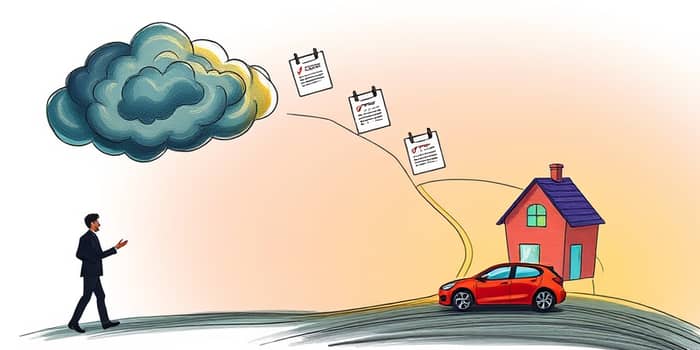
In the world of personal finance, few things carry as much weight as your payment history. This single factor can make or break your ability to secure loans, buy a home, or even start a business. It is the story you tell lenders about your reliability and trustworthiness. Understanding its power is the first step toward taking control of your financial destiny.
Imagine a future where loan approvals come easily and interest rates are low. This is not a dream but a reality built on consistent on-time payments. Every payment you make is a vote of confidence in your financial discipline. It signals to lenders that you are a low-risk borrower, worthy of their trust and investment.
Payment history isn't just a number; it's a reflection of your habits. It comprises 35% of FICO Scores, making it the most significant component. For VantageScore models, it can weigh up to 40%, highlighting its critical role. By focusing on this aspect, you can dramatically improve your credit health and open up new opportunities.
Why Payment History Dominates Credit Scores
Lenders rely on payment history because it is the best predictor of future behavior. It serves as a performance review of your ability to manage debt. When you pay on time, you demonstrate responsibility and reliability.
This factor overshadows others like credit utilization or length of history. It is the strongest indicator of whether you will repay loans. That's why even a single missed payment can have a profound impact. By prioritizing this, you build a solid foundation for your credit profile.
What Constitutes Your Payment History
Your payment history includes data from various accounts reported to credit bureaus. It covers credit cards, retail accounts, and installment loans such as mortgages, auto loans, and student loans. Every month, creditors update this information, painting a detailed picture of your financial behavior.
- Credit cards and retail accounts.
- Installment loans like mortgages and auto loans.
- Consumer finance loans and other debt types.
It also tracks the severity of delinquencies. This includes 30, 60, or 90+ days overdue. The amounts owed on delinquent accounts and the number of past-due items are factored in. Even the time since past issues matters, as older negatives have less impact.
- Delinquency levels and their durations.
- Public records such as bankruptcies or foreclosures.
- Number of accounts paid as agreed, including closed ones.
Non-credit accounts, like utility bills, typically don't report unless sent to collections. This highlights the importance of managing all debts responsibly. By understanding what's included, you can better monitor and improve your history.
The Numbers: How Payment History Affects Your Score
The quantitative impacts are stark and revealing. Consistent on-time payments can boost your score significantly. For example, never-delinquent mortgages show an average 7.68-point FICO increase over time. This positive effect grows with longer histories, especially for recent loans.
On the flip side, negative actions can cause sharp drops. One missed payment can lower your FICO score by an average of 52.58 points. This impact worsens with repeated delinquencies, highlighting the need for vigilance.
The severity of delinquencies matters greatly. Four missed payments can lead to a drop of 98.75 points on average. For ongoing issues over two years, the impact can reach up to 112.73 points. These numbers show why staying current is crucial.
- Average FICO drop for 1 missed payment: 52.58 points.
- Average FICO drop for 4 missed payments: 98.75 points.
- Maximum drop for prolonged issues: up to 112.73 points.
Late payments under 30 days might only incur fees without reporting. But 30+ days overdue are reported and hurt more, especially for those with thin credit files or excellent scores. However, isolated lates can be outweighed by a strong overall history, and the impact diminishes over time.
From Score to Loan: Direct Impacts on Your Financial Future
A strong payment history directly improves your loan prospects. It enhances loan approval odds and leads to lower interest rates. Lenders see you as a safe bet, willing to offer better terms. This can mean the difference between affording a dream home or settling for less.
Conversely, a poor history flags you as high-risk. This often results in denials or unfavorable terms. In the U.S., 48% of recent loan applicants have been denied, with 14% facing multiple rejections. Many of these cases are tied to payment issues, underscoring the real-world consequences.
- Improved chances for mortgage approvals.
- Lower interest rates on auto loans.
- Better terms for personal loans and credit cards.
Credit scores derived from payment history guide lender decisions. They influence proprietary models that also consider income and debt ratios. By mastering your payment habits, you position yourself for success in any financial endeavor.
Bouncing Back: Strategies to Improve Your Payment History
Recovery is possible with deliberate effort. Start by paying on time every month. Set up autopay or reminders to avoid oversights. If you're struggling, contact creditors for hardship plans; many are willing to work with you.
Bring delinquent accounts current to mitigate damage. Adding positive history helps dilute old negatives. Over time, consistent payments reduce the impact of past mistakes. Bankruptcy or collections may linger for seven years, but their effect fades with good behavior.
- Use autopay or calendar alerts for all bills.
- Negotiate with creditors during financial hardship.
- Focus on building new, positive payment records.
Monitor your credit reports regularly. Dispute any inaccuracies that could drag down your score. By staying proactive, you can accelerate your recovery and regain financial stability. Every on-time payment is a step toward rebuilding trust.
A Broader Perspective: Beyond Payment History
While payment history is dominant, other factors play a role. Credit utilization at 30% and length of credit history are also important. Even with a perfect payment record, you might not achieve top scores if other areas are weak. This holistic view is key to comprehensive credit health.
Thin credit files amplify the impact of negatives. Diversifying your credit mix can help. Consider adding different types of accounts, but do so responsibly. Analysis of mortgages shows that always-performing loans gain scores over time, while delinquents face sharp drops.
- Manage credit utilization to keep it below 30%.
- Maintain old accounts to lengthen credit history.
- Avoid opening too many new accounts at once.
Lenders use payment history to predict repayment reliability. It outperforms other factors in forecasting future behavior. By understanding this, you can prioritize actions that yield the greatest benefits. Embrace a mindset of continuous improvement to navigate financial challenges.
In conclusion, your payment history is a powerful tool in shaping your financial journey. It holds the key to unlocking better loan prospects and a secure future. By committing to on-time payments and proactive management, you can transform your credit story. Let each payment be a building block toward the life you envision, filled with opportunity and peace of mind.
References
- https://www.myfico.com/credit-education/credit-scores/payment-history
- https://www.bankrate.com/personal-finance/credit/payment-history-credit-score/
- https://www.afbank.com/article/whats-the-difference-between-payment-history-and-credit-history
- https://www.experian.com/blogs/ask-experian/how-to-improve-payment-history/
- https://www.academybank.com/article/how-are-credit-history-and-payment-history-different
- https://www.capitalone.com/learn-grow/money-management/payment-history/
- https://www.creditkarma.com/credit/i/payment-history-credit-report
- https://www.techcu.com/Resources/Blog/2023/How-Credit-Payment-History-Impacts-Your-Credit-Score
- https://www.experian.com/blogs/ask-experian/credit-education/score-basics/what-affects-your-credit-scores/
- https://www.milliman.com/en/insight/how-mortgage-payments-impact-your-credit-score
- https://inspirefcu.org/unlocking-opportunities-understanding-the-impact-of-credit-scores-on-loan-approvals/
- https://www.finra.org/investors/personal-finance/how-your-credit-score-impacts-your-financial-future
- https://www.bankrate.com/credit-cards/news/credit-denials-survey/