Every investor stands at a crossroads where dreams of financial freedom meet the realities of an unpredictable market. The Growth Grid offers a compass, guiding you through each life phase with intentional, powerful strategies. By aligning your goals with targeted growth tactics, you transform uncertainty into strategic framework mapping growth investing that evolves as you do.
Understanding the Growth Grid Framework
The Growth Grid conceptualizes your investment journey as a matrix: rows represent key life stages, and columns outline core growth strategies. This approach ensures that you adopt the right tactics at the right time, balancing ambition with prudence.
At the heart of this model lies the belief that above-average expansion in revenue and market value can be harnessed by adapting tactics to your age, risk tolerance, and personal objectives. As you advance, your focus shifts from accumulation to preservation, yet the underlying commitment to growth remains constant.
- Foundation (20–30): Build essentials and start small-scale stock screening.
- Strategic Growth (30–50): Expand with thematic and buy-and-hold innovators.
- Pre-Retirement (50–65): Optimize growth while adding stability through due diligence.
- Preservation (65+): Shift to lower-volatility growth and sustainable withdrawals.
Growth Investing Fundamentals
Growth investing targets companies reinvesting earnings into innovation rather than dividends. You may encounter high price-to-earnings ratios, but these valuations reflect expectations of future surges. To succeed, you must tolerate short-term market swings while focusing on long-term compounding.
The process unfolds in three core steps: first, screening for double-digit revenue or earnings growth; second, conducting rigorous due diligence on competitive moats and management; and third, embracing volatility as part of the journey toward outsized returns.
Applying the Growth Grid to Your Life Stage
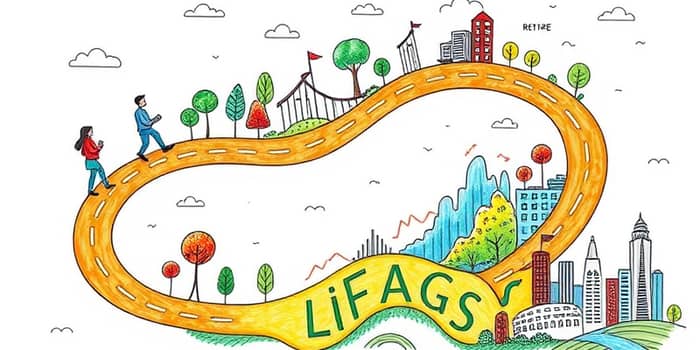
Financial priorities evolve with each decade. The Growth Grid ensures that you deploy the right tactics at every turn, whether you are just starting or planning your legacy. In your twenties, the emphasis is on literacy and habit formation; by your forties, you pursue aggressive diversification; in later years, you blend growth with prudence.
- 20–30: Cultivate budgeting skills, build a 3–6 month emergency fund, explore growth-focused ETFs.
- 30–50: Leverage tax-advantaged accounts, invest in thematic sectors like AI or biotech, apply GARP principles.
- 50–65: Perform tax-loss harvesting, rebalance toward medium-risk growth stocks, establish trusts where appropriate.
- 65+: Transition into low-volatility growth-orientated funds, plan systematic withdrawals, prioritize estate planning.
Navigating Risks and Maximizing Rewards
Growth investing carries inherent volatility. By acknowledging this upfront, you empower yourself to weather market storms with confidence. A disciplined mindset, coupled with regular portfolio reviews, turns uncertainty into opportunity.
- Focus on strong fundamentals rather than market hype.
- Set realistic time horizons for each investment.
- Maintain disciplined portfolio rebalancing routines.
Engaging with a qualified financial advisor or CPA can provide tailored insights and help you avoid common pitfalls, ensuring that your growth trajectory remains uninterrupted by unforeseen setbacks.
Putting It All Together: A Plan for Your Future
Armed with the Growth Grid, you possess a dynamic tool that aligns ambition with life’s realities. Begin by mapping your current stage, defining clear objectives, and selecting growth strategies that resonate with your temperament and timeline.
Over time, revisit your grid, adjust for new goals—such as funding a child’s education or embarking on philanthropic endeavors—and recalibrate risk exposure. This living framework transforms investing from a daunting task into an inspiring voyage of discovery.
By embracing a methodical yet flexible approach, you unlock the power of compounding and craft a resilient portfolio built to endure life’s unpredictable moments. The Growth Grid is more than a model; it is a commitment to your financial well-being and lifelong prosperity.
References
- https://www.bajajamc.com/knowledge-centre/growth-investing
- https://avidianwealth.com/financial-insights/articles/proper-planning-through-lifes-stages-to-avoid-money-worries/
- https://www.poems.com.sg/glossary/strategy/growth-plan-2/
- https://www.secunm.org/about/blog/detail.html?title=the-3-stages-of-wealth-planning
- https://trendspider.com/learning-center/growth-investing-high-risk-high-reward/
- https://eliteincomeadvisors.com/investment-strategy-what-financial-phase-are-you-in/
- https://en.wikipedia.org/wiki/Growth_investing
- https://www.hancockwhitney.com/insights/the-first-step-in-the-financial-planning-process
- https://www.nirmalbang.com/knowledge-center/growth-investing-strategy.html
- https://www.rwroge.com/2023/11/how-life-changes-affect-your-financial-planning-needs/
- https://www.strike.money/stock-market/growth-investing
- https://www.merceradvisors.com/insights/personal-finance/how-to-build-an-investment-plan-for-different-life-stages/
- https://www.bain.com/industry-expertise/utilities-renewables/grid-capital-planning/
- https://www.pinnbank.com/articles/2023/3-financial-phases
- https://atas.net/blog/what-is-grid-trading-and-how-does-it-work/