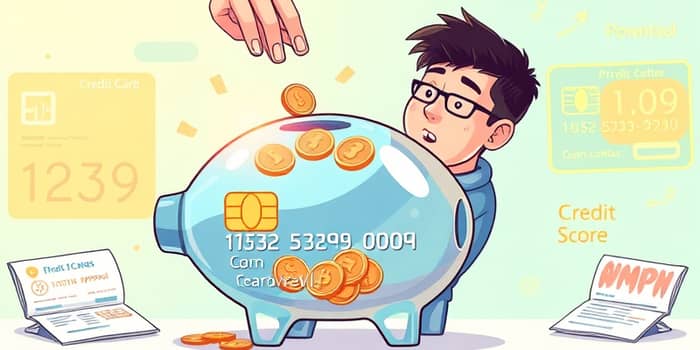
Secured credit cards can be transformative for individuals striving to establish or rebuild their credit profiles. By offering a straightforward path to responsible borrowing, these tools open doors to personal loans, auto financing, and mortgage approvals. Understanding how they function, their advantages over unsecured options, and best practices can empower you to build solid credit history and take control of your financial future.
Understanding Secured Credit Cards
A secured credit card requires a refundable security deposit—typically between $200 and $500—that sets your credit limit. This deposit mitigates issuer risk, making approvals more accessible for consumers with limited or poor credit. Once approved, you use the card just like any other, with the deposit fully recoverable when the account is closed in good standing.
These products target individuals who are unscored or hold deep subprime FICO scores (below 580). Unlike unsecured cards that demand a minimum score around 670, secured cards have no strict credit requirements at many issuers. Whether you are rebuilding after a setback or establishing credit for the first time, this option offers a clear and manageable path to credit building.
Secured vs. Unsecured Credit Cards
One of the most powerful distinctions is ease of approval. Secured cards often require nothing more than age 18+, a valid ID, and a security deposit. In contrast, unsecured cards typically ask for scores above 670 or higher. While secured cards have lower initial limits—averaging $362 for new accounts in 2022 compared to $482 in 2013—they still report to all major bureaus, allowing you to strengthen your profile under the same scoring criteria.
- Approval based on deposit rather than credit score
- Limits scale directly with your refundable deposit
- Full credit bureau reporting mirrors unsecured usage
How Secured Cards Build Credit
Credit scoring revolves around five key factors: payment history, credit utilization, account age, credit mix, and inquiries. Secured cards impact the first four. By making on-time payments and maintaining a utilization rate below 30% (ideally under 10%), you send strong signals to lenders and scoring models.
When your issuer reports consistent, positive activity, you benefit from payment history and credit utilization ratios. Over time, this track record can lift a deep subprime or unscored profile into the fair, good, or even very good score ranges. Some users see an initial score bump within three to six months, with more substantial improvements in six to twelve months.
Timeline to Enhanced Loan Eligibility
Secured card use can translate into tangible loan approval advantages in as little as half a year. Here’s a general timeline:
- Months 1–3: Establishment of payment history with small, regular charges
- Months 3–6: First noticeable credit score increase from positive reporting
- Months 6–12: Expanded credit profile strengthens loan applications for personal, auto, and mortgage products
By month 12 of consistent on-time payments and controlled utilization, many cardholders qualify to graduate to unsecured cards, releasing their deposit and gaining higher limits. Within 18–24 months, the newly built credit history positions you for competitive rates and terms on larger loans.
Key Metrics at a Glance
Direct Benefits for Loan Applications
Lenders evaluate the same core factors when considering loans. A secured credit card helps you:
establish a track record of responsible payments, reduce your credit utilization, and lengthen your average account age. Over time, this translates to lower perceived default risk, unlocking access to personal loans, auto financing, and mortgages at more favorable rates.
For example, moving from a poor score under 580 into the fair range (580–669) can reduce an auto loan APR by several percentage points, saving hundreds in interest. Advancing into the good or very good ranges (670–799) has an even greater impact on mortgage and business loan terms.
Additional Perks to Consider
Many secured cards include value-added features that ease your journey:
- No annual fees or waived fees for balance transfers and cash advances
- Cash back rewards, often 1.5% on unlimited purchases
- Sign-up bonuses, such as $200 after $2,000 in 90 days
- Introductory APR offers (e.g., 0% for 12 months on purchases)
While these benefits vary by issuer, they mirror unsecured card perks, delivering real value as you build your profile.
Best Practices and Common Pitfalls
To maximize benefits and avoid setbacks:
- Keep utilization under 30%, ideally under 10%
- Set up automatic payments to ensure on-time settlements
- Avoid carrying permanent balances at high APRs
- Choose cards that report to all three bureaus for full impact
- Maintain occasional activity; inactivity may trigger account closure
By following these guidelines, you position yourself for a swift transition to unsecured products and coveted loan approvals.
Who Stands to Gain the Most?
Secured credit cards are ideally suited for:
- First-time credit users needing an entry point into the financial system.
- Individuals recovering from past delinquencies or bankruptcies seeking a fresh start.
- Consumers with unscored profiles who must demonstrate creditworthiness from scratch.
In all cases, secured cards offer a low-risk, high-reward avenue to build credit without the barriers imposed by unsecured options.
Conclusion
A secured credit card is more than a temporary tool—it’s a gateway to a stronger financial future. By harnessing a refundable deposit, disciplined spending, and consistent on-time payments, you unlock better loan rates and terms within months. Whether you’re seeking your first auto loan or planning to buy a home, the credit foundation you build today will empower you to achieve your goals tomorrow. Start responsibly, monitor your progress, and watch as new opportunities unfold.
References
- https://www.huntington.com/learn/credit-debt/what-is-a-secured-credit-card
- https://www.bankatfirst.com/personal/discover/flourish/secured-credit-cards.html
- https://www.crestmontcapital.com/blog/how-secured-credit-cards-help-with-loan-approvals
- https://listerhill.com/blog/2025/09/secured-credit-card-benefits
- https://www.sccu.com/es/articles/personal-finance/building-credit-with-a-secured-credit-card
- https://www.becu.org/everyday-banking/credit-card/secured-credit-card
- https://www.lendingtree.com/credit-cards/study/secured-report/
- https://www.sccu.com/articles/personal-finance/what-are-secured-credit-cards
- https://www.experian.com/blogs/ask-experian/using-secured-credit-cards-to-improve-credit-history/
- https://bettermoneyhabits.bankofamerica.com/en/credit/build-credit-with-a-secured-credit-card
- https://ficoforums.myfico.com/t5/Rebuilding-Your-Credit/Credit-Criteria-for-Secured-CCs-BOA-TD-Bnk-US-Bnk/td-p/6819975
- https://employeeinfo.dev2.navyfederal.org/content/nfo/en/home/makingcents/credit-debt/how-does-secured-card-work.html
- https://www.self.inc/blog/how-much-will-a-secured-credit-card-raise-my-score
- https://www.discover.com/credit-cards/secured-credit-card/
- https://fairfigure.com/blog/what-secured-credit-card-builds-credit-the-fastest
- https://www.pnc.com/en/personal-banking/banking/credit-cards/pnc-secured-credit-card.html
- https://www.afbank.com/article/pros-and-cons-of-secured-credit-cards-explained