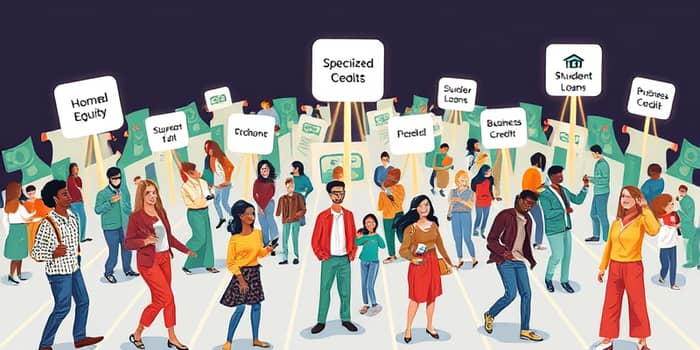
In today's dynamic financial world, specialized credit products emerge as powerful tools designed to meet unique borrower needs beyond standard loans.
They offer tailored solutions that can transform challenges into opportunities for growth and stability.
Understanding these options empowers you to make choices that align with your personal or business goals.
What is Specialized Credit?
Specialized credit refers to niche financial products crafted for specific scenarios, often secured by assets or tied to particular industries.
It provides flexibility where traditional credit falls short, addressing gaps in funding for various life stages.
These tools are essential for navigating unique financial landscapes with confidence and precision.
Common categories include:
- Home equity products for property owners seeking access to funds
- Student loans designed for education expenses and future investment
- Auto loans tailored for vehicle purchases with predictable terms
- Business financing like trade credit for inventory management
- Short-term options such as payday loans for emergency gaps
Each category serves a distinct purpose, enabling targeted support.
A Comprehensive Breakdown of Credit Types
Credit generally falls into revolving, installment, and open-end types, each with niche variants.
Knowing these helps you select the right tool for your situation.
Below is a table summarizing key aspects:
This table highlights how different credit structures cater to various financial demands.
Revolving credit offers adaptability, while installment credit provides stability through fixed terms.
Open-end credit encourages discipline by requiring full monthly repayment.
Niche business options support entrepreneurial ventures with customized solutions.
The Power of a Diverse Credit Mix
Combining different credit types can significantly boost your credit score when managed responsibly.
A healthy mix includes both revolving and installment credit, balancing flexibility with predictability.
This demonstrates to lenders your ability to handle varied financial obligations.
Benefits of a good credit mix include:
- Improved creditworthiness through diverse payment history
- Enhanced capacity to meet different financial needs over time
- Lower interest rates on future loans due to better scores
- Increased access to premium credit products and opportunities
For instance, maintaining a mortgage alongside a credit card shows long-term and short-term debt management skills.
This strategy builds a robust financial profile that opens doors.
Secured vs. Unsecured Credit: Making Informed Choices
Secured credit involves collateral, such as a home or car, which can lower interest rates but risks asset loss if payments are missed.
Unsecured credit relies on your credit history, offering flexibility without collateral but often at higher costs.
Understanding this distinction is crucial for risk assessment.
Consider these factors when choosing:
- Secured options are ideal for large purchases with stable assets as backing
- Unsecured credit suits those with strong credit scores and no collateral to offer
- Evaluate the risks of repossession versus higher annual percentage rates
- Use secured credit strategically to build or repair credit history over time
This knowledge helps you navigate decisions with clarity and confidence.
Practical Scenarios for Specialized Credit
Specialized credit shines in specific life situations, providing targeted support that standard loans cannot.
It empowers individuals and businesses to address unique challenges effectively.
Here are common scenarios where niche credit proves invaluable:
- Homeowners can use HELOCs for home improvements or unexpected expenses
- Students benefit from fixed-rate loans covering tuition and essential materials
- Businesses leverage trade credit for inventory without immediate cash outlay
- Individuals facing short-term gaps might consider payday loans, but caution is vital
- Frequent shoppers use retail cards for rewards and discounts at specific stores
Each option is designed to meet distinct needs, fostering financial empowerment and resilience.
By aligning credit choices with your circumstances, you can optimize outcomes.
Understanding Risks and Mitigation Strategies
While specialized credit offers benefits, it comes with potential pitfalls that require awareness.
High interest rates, especially on products like payday loans, can lead to debt cycles if not managed carefully.
Key risks include:
- Excessive debt from easy access to revolving credit limits
- Collateral loss in secured loans due to payment defaults
- Hidden fees in some niche products that increase overall costs
- Negative impact on credit scores from mismanagement or late payments
To mitigate these risks, adopt proactive strategies:
- Always read terms and conditions thoroughly before committing
- Budget diligently for payments to avoid over-borrowing
- Seek advice from financial advisors when uncertain about options
- Use credit monitoring tools to track your score and stay informed
Responsible use ensures that specialized credit serves as a tool for growth rather than a burden.
Building a Brighter Financial Future
Navigating specialized credit requires continuous learning and proactive management.
By understanding the types, benefits, and risks, you can make informed decisions that support your long-term goals.
Embrace these tools as stepping stones towards financial empowerment and stability.
Remember, responsible credit use is key to unlocking opportunities and achieving dreams.
Start exploring your options today to build a resilient and prosperous financial path.
References
- https://www.capitalone.com/learn-grow/money-management/types-of-credit/
- https://squareup.com/us/en/the-bottom-line/managing-your-finances/types-of-credit
- https://www.bestegg.com/blog/types-of-credit-accounts/
- https://www.experian.com/blogs/ask-experian/what-is-credit-mix-and-how-can-it-help-your-credit-score/
- https://www.wolterskluwer.com/en/expert-insights/understanding-the-types-and-sources-of-consumer-credit
- https://www.synchrony.com/blog/spending/types-of-credit
- https://corporatefinanceinstitute.com/resources/commercial-lending/types-of-credit/
- https://www.academybank.com/article/credit-mix-how-different-credit-types-impact-your-score
- https://students.austincc.edu/money/types-of-credit/
- https://www.discover.com/credit-cards/card-smarts/types-of-credit/