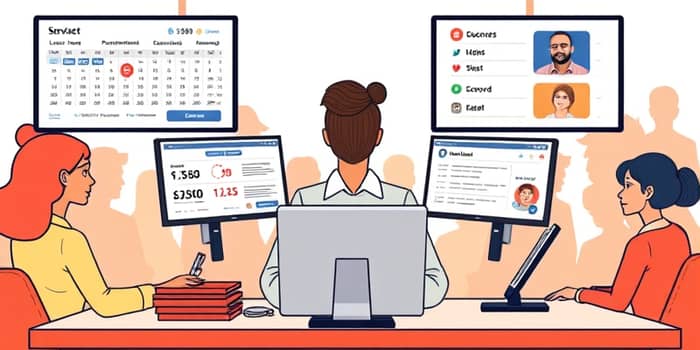
Loan servicers play a crucial role in the lifecycle of loans, acting as the bridge between borrowers and lenders to ensure seamless administration and support.
Understanding Loan Servicers
Loan servicers are specialized firms tasked with administering loans from the moment they leave the hands of originators until they are fully repaid. Whether the loan funds a home purchase, finances higher education, or supports a small business, servicers remain at the heart of the repayment process.
These companies partner with banks, credit unions, and government agencies to handle daily operational tasks, maintain borrower relationships, and uphold compliance with a myriad of legal requirements. Their expertise allows lenders and investors to focus on capital deployment, while servicers ensure account accuracy, timely disbursements, and responsive customer support.
Core Functions of Loan Servicers
At the foundation of loan servicing are several key activities designed to protect both borrower and lender interests. Through precise execution of these tasks, servicers maintain portfolio quality and foster borrower confidence.
- collecting and processing payments each billing cycle, including principal, interest, and any escrow contributions
- managing escrow for taxes and insurance to ensure timely payment of property taxes and homeowner’s insurance premiums
- maintaining detailed loan records and handling changes such as deferments, forbearance, or repayment plan adjustments
- responding promptly to borrower inquiries via phone, email, or online portals, resolving disputes and providing guidance
- coordinating loss mitigation efforts—like loan modifications or short sales—for delinquent accounts
- conducting accurate remittance to investors, with monthly reconciliations and transparent accounting
By maintaining borrower relationships with empathy and precision, servicers uphold trust, minimize delinquencies, and support financial stability across the loan’s duration.
Types of Loan Servicers
Loan servicers often specialize in particular loan categories, each with unique regulatory and operational demands. The main types include:
- Mortgage Servicers: Oversee residential and commercial property loans, with a strong focus on escrow management and foreclosure prevention.
- Student Loan Servicers: Manage federal and private education loans, guiding borrowers through repayment plans, deferments, and statutory compliance.
- Consumer and Business Loan Servicers: Handle auto, personal, and small business loans, tailoring billing, collection, and support services to varied customer needs.
Each category requires targeted expertise, specialized systems, and compliance with specific statutes—such as RESPA for mortgages or the Higher Education Act for student lending.
Industry Landscape and Market Trends
The global loan servicing market continues to expand rapidly, driven by rising loan origination volumes and increasing complexity in financial regulations. A compound annual growth rate of over 16% reflects surging demand for expert administration and digital transformation.
In Q1 2025 alone, single-family mortgage originations reached $246 billion, with refinances surging 64% year-over-year. Although foreclosure starts climbed by 23% in Q3, overall loan performance remains historically strong as pandemic-era distortions subside.
Elevating Customer Experience
Customer satisfaction has become a critical differentiator. Borrowers expect transparency, swift responses, and digital convenience. To meet these demands, servicers are investing heavily in personalized self-service digital customer portals that allow instant account access, payment scheduling, and real-time updates.
J.D. Power scores reveal a dip in mortgage servicing satisfaction, highlighting communication and support gaps. By focusing on empathetic interactions and clear guidance, servicers can restore borrower trust and enhance lender reputations.
Technological Advancements
Innovation is reshaping loan servicing. Modern platforms harness cloud computing, machine learning, and robust APIs to streamline operations and enable leveraging borrower behavior analytics platforms for predictive risk management.
Automated workflows cut manual errors, while advanced reporting tools deliver portfolio insights that inform strategic decision-making. Integrations with digital payment processors and verification services further reduce friction and accelerate collections.
Regulatory Compliance and Servicing Transfers
Servicers operate within a complex legal framework, adhering to federal and state guidelines—from RESPA disclosures to the Consumer Financial Protection Bureau’s servicing rules. They are also subject to audits and strict controls and must implement robust quality assurance programs.
When servicing rights change hands, seamless transfers are imperative. Borrowers must experience no interruption in their payments or account access, and all systems must align to preserve data integrity and service standards under compliance and regulatory demands.
Challenges and Strategic Outlook
With rising interest rates, growing household debt, and the conclusion of student loan forbearance programs, servicers face heightened default risks. In this environment, navigating rising interest rate environment requires agile loss mitigation strategies and proactive borrower outreach.
- Enhance digital engagement to improve response times and reduce call center volumes.
- Develop tailored hardship assistance programs to minimize delinquencies and defaults.
- Invest in scalable technology that supports regulatory changes and portfolio diversification.
Looking ahead, the most successful servicers will blend operational excellence with digital innovation and empathetic customer service. By doing so, they will safeguard lender interests, empower borrowers, and drive sustainable growth in the evolving financial landscape.
References
- https://www.consumerfinance.gov/ask-cfpb/what-is-student-loan-servicer-en-583/
- https://amerinat.com/loan-servicing/what-expect-loan-servicer-2025/
- https://admortgage.com/glossary/servicer/
- https://www.jdpower.com/business/press-releases/2025-us-mortgage-servicer-satisfaction-study
- https://servicing-guide.fanniemae.com/svc/a2-1-01/general-servicer-duties-and-responsibilities
- https://www.milliman.com/en/insight/mortgage-market-and-housing-trends-q1-2025
- https://www.law.cornell.edu/definitions/uscode.php?width=840&height=800&iframe=true&def_id=12-USC-1379209309-1685169817&term_occur=999&term_src=
- https://www.fedsmallbusiness.org/reports/survey/2025/2025-report-on-employer-firms
- https://studentaid.gov/manage-loans/repayment/servicers
- https://mortgagetech.ice.com/resources/data-reports/first-look-at-september-2025-mortgage-data
- https://www.labor.maryland.gov/finance/industry/frslservfaqs.shtml
- https://www.mba.org/news-and-research/newsroom/news/2025/08/19/imbs-report-production-profits-in-second-quarter-of-2025
- https://legal-resources.uslegalforms.com/l/loan-servicer
- https://www.thebusinessresearchcompany.com/report/loan-servicing-global-market-report
- https://privocorp.com/what-servicers-are-doing-to-navigate-mid-2025-market-volatility/