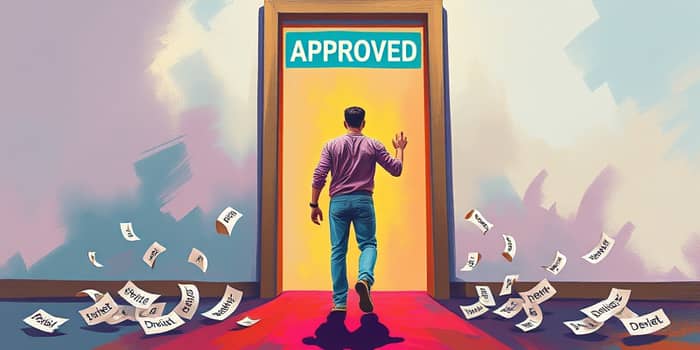
In today's economic climate, a loan rejection can feel like a devastating blow. However, it's not the end of your financial journey—it's a chance to learn, adapt, and come back stronger.
Recent data shows that loan rejections have surged to unprecedented levels. The overall U.S. credit application rejection rate has hit 24.8% over the past year, the highest since tracking began in 2014. This alarming trend reflects tighter lending standards and increased financial pressures on consumers and businesses alike.
For many, this means facing unexpected hurdles when seeking mortgages, auto loans, or credit cards. Understanding why rejections happen and what you can do next is crucial for turning setbacks into opportunities.
The Rising Tide of Loan Rejections
To grasp the full scope, let's explore the key statistics that define today's lending landscape. These numbers highlight the challenges and underscore the importance of preparation.
- Overall credit application rejection rate: 24.8% in the past 12 months, up from 23.1% in June 2024.
- Mortgage application rejections: Averaged 20.7% in 2024, with recent peaks at 22.6% in October 2024.
- Mortgage refinance rejections: Hit an average of 25.6% in 2024, and spiked to 45.7% in some data, an all-time high.
- Auto loan rejections: Stand at 15.2%, the second-highest on record.
- Credit card rejections: Remain steady at 21.2%, historically high levels.
- Application likelihood: Mortgage applications have dipped to 6.4% on average in 2024, indicating cautious consumer behavior.
These statistics paint a stark reality where access to credit is becoming increasingly difficult. Factors like inflation and recession fears are driving lenders to adopt more stringent criteria, making it essential to stay informed.
Common Reasons for Loan Rejections
Understanding the specific reasons behind a denial is the first step toward addressing the issue. Rejections typically fall into several key categories that you can identify and work on.
- Credit-related factors: Poor credit history, low scores, high debt-to-income ratios, or errors in credit reports are common culprits. Lenders must disclose if credit was a factor.
- Financial and documentation issues: Incomplete or outdated documents, such as bank statements or tax returns, can lead to denial. Seasonal business fluctuations or insufficient cash flow also play a role.
- Business-specific challenges: A short business track record, deteriorating performance, or lack of revenue proof can hinder approvals.
- Economic and macro factors: Broader trends like inflation and tighter lending standards post-pandemic affect all applicants.
- Other reasons: Non-compliance with procedures or ineligibility due to size, especially for SBA loans.
By pinpointing the exact cause, you can tailor your response effectively. For instance, if it's a credit issue, focusing on improving your score becomes a top priority.
Your Legal Rights and Protections
When a loan is denied, you have specific rights that can empower you to take action. Knowing these rights is essential for navigating the aftermath of a rejection.
- Right to an adverse action notice: Lenders must provide this document detailing denial reasons, credit factors, and underwriting shortfalls.
- Right to a free credit report: After a denial, you can obtain a free credit report to check for errors that might have contributed to the rejection.
These protections ensure transparency and give you the tools to understand what went wrong. Don't hesitate to request the adverse action notice if it isn't provided automatically.
The Appeal and Reconsideration Process
If you believe your application was unfairly denied, you have the option to appeal. This process varies by loan type but generally involves several strategic steps that can increase your chances of success.
For any loan, here are the general steps to follow for a reconsideration request.
- Request the full adverse action notice to get specific reasons for denial.
- Review and correct any errors, such as discrepancies in your credit report or incomplete documentation.
- Gather new evidence, including updated financials, profit and loss statements, cash-flow projections, and bank statements.
- Submit a written reconsideration request, explaining the errors and improvements, and include all supporting documents. Keep it factual and professional.
- Await the second review, which typically takes 2 to 10 business days and may involve a new credit pull or cash-flow analysis.
It's important to note that appealing usually doesn't hurt your credit score, unless a new hard credit inquiry is required. There are different types of appeals, such as administrative for procedural errors or underwriting reconsideration for new data.
For SBA and business loans, the process has specific nuances that require careful attention.
- Reconsideration must be submitted within 6 months of denial and must overcome all original reasons for rejection.
- This often involves a multi-layer review, starting with the lender and then moving to the SBA Office of Credit Risk Management.
- Ideal scenarios include recent improvements, stronger documentation, credit errors, or seasonal oversight that can be addressed.
To help you navigate, here's a table summarizing key aspects of the appeal process for different loan types.
This table provides a quick reference, but always check with your specific lender for exact procedures. Understanding these timelines and factors can streamline your appeal efforts.
Next Steps After Rejection: Turning Setbacks into Success
Even if an appeal isn't successful or isn't the right path, there are numerous ways to move forward and improve your chances for future applications. Taking proactive steps can transform a rejection into a valuable learning experience.
- Improve your financial profile: Fix credit errors, reduce your debt-to-income ratio, build a longer business history, and enhance cash flow with better documentation.
- Explore alternatives: Consider reapplying with different lenders that have more lenient criteria, such as non-bank institutions or revenue-based financing options. Working capital loans or equipment financing might be suitable alternatives.
- Strategic preparation: Address red flags proactively before applying again. Use financial advisors to help match you with appropriate loan programs.
- Know when to skip appeal: If the issues are uncorrectable in the short term, it might be better to focus on improving your situation and applying elsewhere.
- Stay informed about trends: With forecasts indicating that 32% of consumers expect finances to worsen in 2026, being aware of economic shifts can help you plan better.
By implementing these strategies, you can build resilience and increase your likelihood of approval in the future. For example, if poor credit was the issue, use this as motivation to rebuild your score through timely payments and debt reduction.
Broader Context and Future Outlook
The data on loan rejections comes from sources like the NY Fed SCE Credit Access Survey, which has been tracking trends since 2013. The rising rejection rates signal a credit tightening environment, even as demand remains stable.
In the housing market, new underwriting changes, such as Fannie Mae and Freddie Mac dropping minimum credit scores and using alternative data like rent payments, offer hope for some applicants. However, consumer sentiment suggests lower future application likelihood for mortgages and credit cards into 2025-2026.
Understanding these broader trends can help you contextualize your personal experience and make informed decisions. For instance, if you're planning to apply for a mortgage, being aware of underwriting changes might influence your timing and preparation.
Conclusion: Empowering Yourself in the Face of Rejection
Loan rejections are a challenging reality for many, but they don't have to define your financial journey. By understanding the reasons, knowing your rights, and taking proactive steps, you can navigate this obstacle with confidence and determination.
Remember, every rejection is a chance to reassess and improve. Whether it's through appealing the decision, enhancing your financial health, or exploring alternative options, there are always paths forward. Stay resilient, seek advice when needed, and keep moving toward your goals with a positive mindset.
In the end, knowledge and perseverance are your greatest assets. Use this experience to build a stronger financial foundation, and let it inspire you to achieve greater success in the future.
References
- https://nationalmortgageprofessional.com/news/mortgage-application-rejections-hit-decade-high
- https://www.crestmontcapital.com/blog/can-you-appeal-a-loan-denial-decision-a-complete-guide-for-small-business-owners
- https://www.webull.com/news/13934696919426048
- https://www.law.cornell.edu/cfr/text/13/120.193
- https://www.emarketer.com/content/rejection-rates-new-credit-access-tick-upward-new-york-fed-data
- https://studentaid.gov/appeal-credit
- https://www.newyorkfed.org/microeconomics/sce/credit-access
- https://www.consumerfinance.gov/ask-cfpb/my-credit-application-was-denied-because-of-my-credit-report-what-can-i-do-en-1253/
- https://newsroom.transunion.com/2026-consumer-credit-forecast/
- https://www.experian.com/blogs/ask-experian/what-to-do-if-your-loan-is-denied/
- https://www.bankrate.com/banking/financial-outlook-survey/
- https://www.occ.gov/topics/supervision-and-examination/dispute-resolution/bank-appeals/bank-appeals-process.html
- https://www.citi.com/personal-loans/learning-center/basics/what-to-do-if-personal-loan-keeps-getting-decline
- https://www.bankrate.com/loans/personal-loans/tips-to-recover-loan-denial/
- https://business.bankofamerica.com/en/resources/what-can-i-do-if-my-business-loan-is-not-approved
- https://www.lendingclub.com/resource-center/personal-loan/what-to-do-if-you-are-declined-a-personal-loan