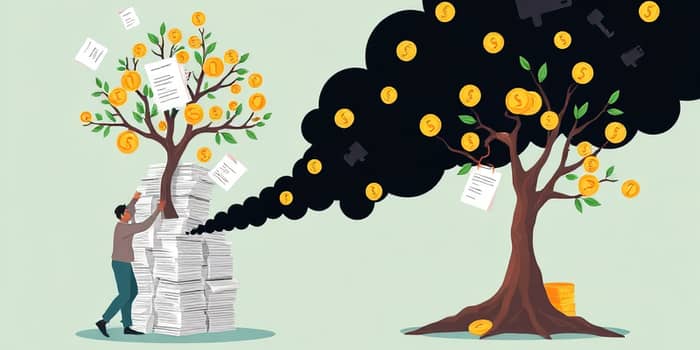
Debt often feels like an anchor, dragging you down with stress and endless payments.
But what if you could flip the script and turn it into a powerful tool for growth?
This journey starts with a mindset shift, transforming debt from a burden into a benefit that opens doors to financial freedom.
By leveraging structured strategies, you can manage debt effectively and unlock opportunities you never thought possible.
Imagine replacing collection calls with calm and replacing uncertainty with a clear path forward.
This article will guide you through practical steps to achieve just that, inspiring hope and providing actionable help.
The Power of Mindset: Transforming Debt Perception
Your view of debt shapes your financial reality.
Seeing it as a manageable tool instead of a permanent liability is the first step toward recovery.
This shift allows you to focus on solutions rather than problems, reducing anxiety and building confidence.
Think of debt as a challenge to overcome, not a trap to endure.
Many people have transformed their finances by adopting this proactive approach.
It’s about taking control and turning obstacles into stepping stones for a brighter future.
Understanding Debt Management Plans (DMPs)
A Debt Management Plan is a structured program offered by nonprofit credit counseling agencies.
It consolidates your unsecured debts, such as credit cards, into one monthly payment.
The agency negotiates with creditors on your behalf to lower interest rates and waive fees.
This process simplifies your financial life and accelerates debt payoff.
Eligibility typically requires steady income and a commitment to close credit cards.
DMPs are ideal for those stuck in minimum-payment cycles or facing collection notices.
Here’s how DMPs work in a nutshell:
- You make a single payment to the agency each month.
- The agency distributes funds to your creditors.
- Creditors often reduce interest rates, sometimes from 18–29% APR to much lower.
- The timeline is usually 3 to 5 years, compared to decades on minimum payments.
This structured approach provides a clear endpoint, making debt feel less overwhelming.
Key Benefits of DMPs: From Stress to Stability
DMPs offer multiple advantages that transform debt into an opportunity.
They provide immediate stress relief by reducing collection calls and simplifying payments.
Over time, they save you thousands in interest and fees, freeing up cash for other goals.
Your credit score can improve as you make on-time payments, showcasing financial responsibility.
Here are the core benefits detailed in a list:
- Simplified payments with one monthly amount.
- Lower interest rates and waived fees from creditors.
- Fewer or no collection calls for peace of mind.
- Credit improvement through consistent payment history.
- Financial education on budgeting and spending habits.
- A clear path to debt freedom in 3-5 years.
Statistics show that 93% of clients report reduced stress, and 91% feel better prepared financially.
This isn’t just about paying off debt; it’s about building a foundation for lifelong financial health.
Supporting Strategies for Debt Leverage
Beyond DMPs, other strategies can complement your debt management efforts.
These methods help you accelerate payoff and leverage debt for broader opportunities.
Consider integrating them into your plan for maximum impact.
First, debt repayment methods offer different approaches:
- Avalanche method: Pay off debts with the highest interest rates first to save money.
- Snowball method: Start with the smallest balances for quick wins and momentum.
- Prioritize high-interest debts over minimum payments to reduce overall cost.
Second, debt consolidation can simplify multiple debts into one loan with a lower rate.
Third, balance transfers to 0% APR cards can provide a temporary interest-free period for aggressive payoff.
Fourth, negotiating directly with creditors might yield lower rates if you show repayment intent.
Fifth, budgeting is crucial; use zero-sum budgeting where every dollar is assigned a purpose.
Here’s a simple budgeting example:
- Allocate income to essentials, savings, and debt payments.
- Aim to pay more than the minimum to chip away at principal.
- Build an emergency fund to avoid new debt.
These strategies free up cash flow, allowing you to invest in opportunities like savings or education.
Real Numbers and Statistical Impact
Understanding the numbers behind debt management can motivate and inform your decisions.
For instance, reducing interest rates from 25% to 10% can save thousands over a few years.
On minimum payments, a $20,000 debt at 25% APR might take over 30 years to repay.
With a DMP at a reduced rate, it could be paid off in about 4 years, saving significant money.
This table compares DMP outcomes versus minimum payments for a hypothetical scenario:
These numbers highlight the tangible benefits of proactive debt management.
They demonstrate how strategic planning can turn a financial burden into a manageable project.
Success Stories: Real-Life Transformations
Hearing from others who have succeeded can inspire your own journey.
Many people have used DMPs to escape debt and rebuild their lives.
For example, one client reported that structure was key after years of failing on their own.
They found confidence in facing challenges head-on and now enjoy better financial health.
Another story involves someone who leveraged debt payoff to start investing for the first time.
These successes show that with the right approach, debt can become a stepping stone.
Here are common themes from success stories:
- Overcoming initial fear and taking the first step.
- Sticking to the plan through challenges.
- Celebrating small wins along the way.
- Using newfound financial freedom to pursue dreams.
These narratives prove that transformation is possible with dedication and smart strategies.
Important Considerations and Caveats
While DMPs and other strategies offer great benefits, it’s essential to be aware of potential drawbacks.
A short-term credit score dip may occur when closing credit accounts.
Commitment is required, including steady income and avoiding new debt during the plan.
DMPs typically don’t cover secured debts, federal student loans, or tax debts.
Always work with reputable nonprofit agencies, such as those affiliated with the NFCC.
Here are key caveats to keep in mind:
- Ensure the agency is certified and offers free consultations.
- Understand all terms and fees before enrolling.
- Be prepared for lifestyle adjustments to stick to the budget.
- Recognize that results vary based on individual circumstances.
By acknowledging these factors, you can make informed decisions and set realistic expectations.
Debt management is a journey, but with the right tools, it leads to lasting benefit.
References
- https://www.nfcc.org/blog/five-benefits-of-a-debt-management-plan/
- https://www.rbfcu.org/learn/article/who-benefits-from-a-debt-management-plan
- https://www.cbsnews.com/news/surprising-debt-management-program-benefits-to-know/
- https://www.glcu.org/resource-center/blog/mastering-debt-management-a-blueprint-to-financial-freedom/
- https://www.advantageccs.org/who-could-benefit-from-a-debt-management-program/
- https://www.associatedbank.com/education/articles/personal-finance/loans-and-debt/how-to-get-out-of-debt-strategies
- https://www.consolidatedcredit.org/debt-management-program/is-it-right-for-you/