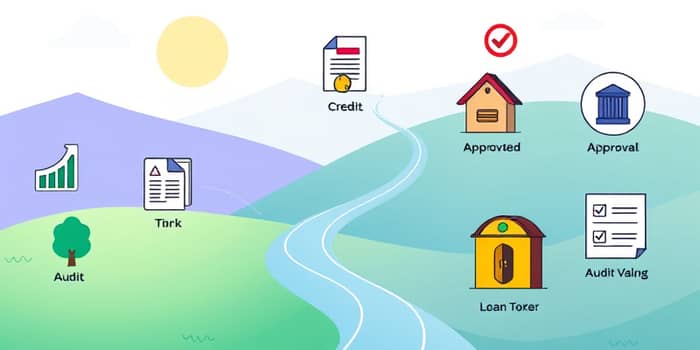
Embarking on a loan application can feel like stepping into a complex maze, but with the right map, you can navigate it with confidence.
This guide demystifies every stage, empowering you to make informed decisions and avoid pitfalls along the way.
Understanding the journey from start to finish transforms uncertainty into a manageable process that benefits both borrowers and professionals.
Pre-Application Preparation and Pre-Approval
Before formally applying, assessing your readiness is crucial for a smooth experience.
Start by checking your credit score and calculating your borrowing needs based on your budget.
Gather preliminary documents like income proof, asset statements, and identification to streamline the initial steps.
Consider pre-qualification or pre-approval, which provides a quick estimate or verified assessment of your purchasing power.
- Use a pre-approval letter to showcase your financial strength to sellers or lenders.
- Stay organized and communicate promptly to avoid delays.
- Avoid major financial changes during this phase to maintain stability.
Application Submission
The formal process begins with submitting your application, including details like loan amount and purpose.
Required documents vary by loan type but often include personal financial statements and tax returns.
During the initial review, lenders generate a Loan Estimate and may offer an interest rate lock to secure favorable terms.
- For consumer credit, review policies and ensure borrower authorization is in place.
- Provide accurate property details for mortgages to avoid complications later.
Processing and Underwriting
This core stage involves rigorous risk evaluation to determine loan viability.
Processing verifies documents such as bank statements and orders appraisals or title searches as needed.
Underwriters apply the Five C’s of Credit: Character, Capital, Capacity, Collateral, and Conditions.
They assess factors like credit scores, repayment history, and cash flow to grade risk consistently.
- Milestones include conditional approval with specific conditions to meet before proceeding.
- Updates are shared with all parties, including borrowers and real estate agents.
Sound methodology and thorough documentation are essential for a fair assessment.
Decision, Approval, and Pre-Closing
Once underwriting is complete, a decision is made to approve or deny the loan.
If approved, pre-closing activities involve reviewing appraisals and ensuring compliance with all terms.
Achieving clear to close status means all conditions are met and final figures are balanced.
- Order and review necessary documents like title insurance and loan agreements.
- Communicate terms clearly to the borrower to set expectations.
Closing and Funding
This finalization stage seals the deal and transfers funds accordingly.
Signing occurs at a designated office, where loan documents are executed and closing costs are paid.
Disbursement releases funds, and for purchases, title is transferred and keys are handed over.
- Provide copies of all documents to involved parties for record-keeping.
- Ensure wire transfers are secure and timely to avoid last-minute issues.
Post-Closing Monitoring and Servicing
After funding, ongoing oversight ensures the loan remains compliant and risks are managed.
Loan portfolio monitoring tracks compliance and integrity of risk grading over time.
Transaction verification traces disbursements and repayments to documents and bank statements.
Regulatory compliance reviews disclosures and interest rates to align with laws.
- Implement surveillance procedures to detect any anomalies early.
- Use digital tools to streamline monitoring and reduce errors.
Audit and Compliance Review
The final stage involves thorough audits to validate the entire process and ensure accountability.
Preliminary risk assessment identifies credit, market, and operational risks based on internal controls.
Substantive testing includes inspecting loan documents and verifying transactions against ledgers.
Analytical procedures, such as ratio analysis, compare trends to identify discrepancies.
Compliance checks ensure disclosures like Loan Estimates meet regulatory standards.
- Digitize documents for easier audit access and review.
- Review prior reports and credit policies to maintain consistency.
Key Concepts and Best Practices
Mastering the Five C’s of Credit—Character, Capital, Capacity, Collateral, Conditions—is vital for underwriting success.
A documents checklist should include universal items like financial statements and ID, plus mortgage-specific elements.
Timelines vary, with pre-approval being quick and undertaking taking days to weeks for completion.
Focus on risks such as delinquencies or documentation deficiencies during audits to prevent issues.
Best practices include using digital management tools and responding promptly to lender requests.
Regulatory ties, like FDIC reviews, ensure compliance and protect all parties involved.
By understanding these elements, you can navigate the loan journey with greater ease and confidence.
Embrace proactive steps to turn potential obstacles into opportunities for financial growth.
References
- https://farmcreditcfl.com/resources/article/5-basic-steps-loan-approval-process
- https://www.biz2x.com/loan-portfolio-monitoring/compliance-audit-loan-monitoring-process/
- https://www.cohenmortgage.com/blog/236658/purchasing-a-home/the-loan-application-process-step-by-step-guidance
- https://www.mortgageauditsonline.com/articles/audit-procedures-for-verifying-loan-balances-and-transactions/
- https://www.firstmerchants.com/resources/learn/blogs/blog-detail/resource-library/2024/01/03/the-mortgage-loan-process-a-step-by-step-guide
- https://dhjj.com/what-are-the-most-important-financial-statement-audit-requirements/
- https://www.experian.com/blogs/ask-experian/personal-loans-what-to-know-before-you-apply/
- https://www.knowledgeleader.com/tools/consumer-credit-lending-audit-work-program
- https://www.bankofamerica.com/mortgage/learn/guide-to-the-mortgage-loan-process/
- https://noteservicingcenter.com/comprehensive-private-loan-disclosure-audits-your-7-step-guide-to-compliance/
- https://www.navyfederal.org/loans-cards/mortgage/mortgage-basics/mortgage-process.html
- https://resources.liveoak.bank/blog/what-happens-during-the-loan-application-process
- https://www.suralink.com/blog/financial-audit-explained
- https://www.regions.com/insights/personal/article/how-to-apply-for-a-loan
- https://www.youtube.com/watch?v=L15pTyphVEA
- https://www.blooma.ai/blog/the-4-stages-of-the-loan-origination-process