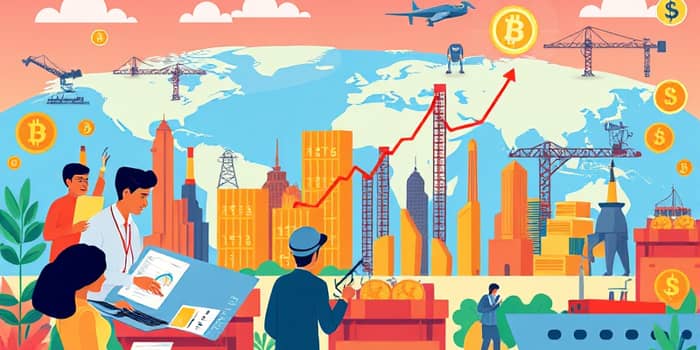
As the world economy enters 2026, projections point to growth that remains moderate, below pre-pandemic growth levels. Amid trade tensions, geopolitical risks, and policy shifts, governments and businesses must navigate a complex landscape.
Global Growth Outlook
Forecasts for global GDP growth in 2026 range between 2.4% and 3.3%, reflecting varied assumptions about policy support, consumer resilience, and technological adoption. The IMF’s 3.3% estimate contrasts with Coface’s 2.4–2.5% view, while UN agencies and private forecasters settle near 2.6–2.8%. Consensus suggests growth stabilizing below the pre-pandemic potential of 3.2%, yet powered by targeted stimulus and the ongoing AI boom.
Key drivers include monetary and fiscal easing measures, tax incentives, and investments in digital infrastructure. However, headwinds persist: tariffs, high sovereign debt, and subdued capital spending threaten to dampen momentum.
Regional and Country Forecasts
Regional projections reveal stark contrasts. The United States is expected to expand by roughly 2.0–2.6%, benefiting from corporate tax cuts and consumer spending. China, at 4.6%, faces challenges in rebalancing and overcapacity. India leads with 6.6% growth, fueled by public investment and robust domestic demand. The Eurozone slows to around 1.0–1.3%, weighed down by geopolitical uncertainty and modest consumer uptake.
Trade, Investment, and Inflation Dynamics
Global trade growth is expected to decelerate from 3.8% in 2025 to around 2.2% in 2026, as front-loaded shipments fade and tariff barriers persist. Asia-led value chains and a services rebound offer pockets of strength, but shifting supply networks and national regulations pose challenges.
Investment remains uneven. AI-related capital spending surges in advanced economies, yet developing markets struggle under fiscal constraints and high borrowing costs. The resulting divergence risks widening inequalities.
- Trade growth slows amid sustained tariffs and regulatory shifts.
- AI-related investment sparks AI-driven productivity and investment gains in key sectors.
- Headline inflation eases to 3.1%, though supply bottlenecks linger.
Risks and Resilience
The outlook is skewed to the downside. Key risks include protracted geopolitical conflicts, a resurgence of protectionism, and potential corrections in overvalued tech assets. Climate shocks and sovereign debt burdens further threaten stability.
- Geopolitical and trade uncertainties disrupt supply chains.
- High public debt limits fiscal buffers in emerging markets.
- Potential AI bubble if productivity gains disappoint.
- Climate-related disruptions intensify economic volatility.
Yet adaptation strategies can build resilience. Diversifying trade partnerships—especially through South-South links—helps offset exposure to advanced-economy turmoil. Hardening corporate balance sheets and stress-testing scenarios prepares firms for shocks.
Strategies for Businesses and Policymakers
To thrive amid geopolitical and trade uncertainties, stakeholders must embrace agility and long-term planning. Central banks and treasuries should coordinate to restore confidence while preserving room for maneuver in future downturns.
- Strengthen fiscal buffers and pursue structural reforms and fiscal buffers to enhance shock absorption.
- Accelerate digital and green transitions, leveraging private sector adaptability and resilience.
- Invest in workforce upskilling to capture AI-driven productivity and investment gains.
- Expand regional trade corridors, focusing on diversified supply chains.
Businesses should implement rigorous scenario planning, build dynamic supply chain networks, and foster innovation ecosystems. For policymakers, balancing stimulus with debt sustainability will be critical. Transparent communication and regulatory clarity will reduce uncertainty and spur private-sector confidence.
As the global economy navigates 2026, the interplay of policy support, technological breakthroughs, and market resilience will shape outcomes. While growth remains moderate, below pre-pandemic growth levels, proactive adaptation and strategic investments can unlock new opportunities and secure a more robust, inclusive future.
References
- https://desapublications.un.org/publications/world-economic-situation-and-prospects-2026
- https://unctad.org/news/10-trends-shaping-global-trade-2026
- https://www.accaglobal.com/gb/en/professional-insights/global-economics/global-economic-outlook-2026.html
- https://www.goldmansachs.com/insights/outlooks/2026-outlooks
- https://www.coface.com/news-economy-and-insights/economic-outlook-for-2026-preparing-european-businesses-for-turbulence
- https://www.imf.org/en/publications/weo/issues/2026/01/19/world-economic-outlook-update-january-2026
- https://www.spglobal.com/market-intelligence/en/news-insights/research/2026/01/global-economic-outlook-january-2026
- https://www.weforum.org/meetings/world-economic-forum-annual-meeting-2026/sessions/global-economic-outlook-af4fed3639/
- https://www.oxfordeconomics.com/key-themes-2026/