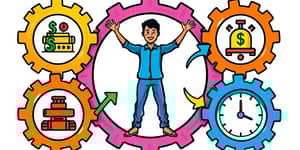
Financial alchemy offers a powerful lens through which we can view debt not as a burden, but as a source of potential growth. By understanding the techniques that convert liabilities into high-value assets, individuals and institutions alike can harness debt to fuel innovation, expansion, and personal prosperity.
In this article, we explore the mechanisms behind modern alchemy in finance, from cutting-edge securitization to personal strategies that turn monthly payments into wealth-building opportunities. Let’s embark on a journey that blends rigorous analysis, practical tips, and philosophical insights.
Understanding Financial Alchemy
At its core, financial alchemy is about transforming lower-quality or risky debt into instruments that appeal to a broad range of investors. This metamorphosis hinges on two pillars:
- Securitization of illiquid assets
- Structured layering of risk and reward
Securitization turns illiquid assets into tradable securities, allowing banks to offload large pools of loans, while investors gain access to diversified cash flows. Through clever engineering, risk is sliced and prioritized, creating tranches that cater to conservative and aggressive appetites alike.
The Mechanics of Collateralized Loan Obligations
Collateralized Loan Obligations (CLOs) illustrate financial alchemy at scale. They bundle 200+ leveraged loans—loans to companies with higher debt levels—and repurpose their cash flows into a layered structure. These tranches follow a strict waterfall distribution of interest and principal:
- Top tranches (AAA): ultra-secure, low-yield
- Middle tranches (AA, A, BBB): moderate risk and return
- Lower tranches (BB, equity): high-yield, higher risk
The result is a spectrum of investment choices, from pension funds seeking stability to hedge funds chasing lucrative equity slices.
Historical Performance and Risk Management
Historical data underscores the resilience of CLOs. Default rates on senior secured leveraged loans have hovered around 3–4% in recent years, compared to a peak of 10% during the Global Financial Crisis.
Even in stress scenarios, losses remain contained. Assuming 20% of loans default simultaneously, with a loss given default of 20%, total portfolio losses approximate 4%. In such cases, the top 95% of cash flows remain protected, illustrating the power of diversification.
Comparing CLOs and CDOs
CLOs often draw comparisons to the infamous CDOs of 2008. Yet key distinctions make them more robust today:
- CLOs use senior secured business loans; CDOs relied on subprime mortgages.
- Dual-agency rating oversight enhances transparency in CLOs.
- Covenant-lite trends may reduce defaults but increase recovery uncertainty.
These improvements reflect lessons learned, ensuring CLOs avoid the systemic pitfalls that toppled many CDO tranches during the crisis.
Philosophical Perspectives on Debt
Beyond mathematics, debt carries deep philosophical implications. Economist Frederick Soddy warned that debt endures without ever rusting, while real wealth decays over time—an arc of entropy. Exponential debt growth resembles a perpetual motion machine in a finite world, destined for correction through inflation, bankruptcy, or other crises.
Understanding this dynamic encourages prudent use of leverage: respect its power, but remain vigilant against unsustainable expansion.
Practical Strategies for Personal Finance Alchemy
Individuals can adopt alchemy principles on a personal scale by repositioning ordinary debt payments into wealth-building engines. Consider these actionable tactics:
- Accelerate high-interest debt payoff, then redirect payments into investments.
- Negotiate lower rates or refinance when market conditions favor.
- Boost income through side hustles or upskilling to accelerate debt clearance.
- Adopt a spending freeze on non-essentials, channeling savings toward retirement.
For example, freeing up $500 per month creates a catalyst: shift that amount from credit card bills to a retirement account earning compound returns. Over time, this disciplined reallocation can outpace the original debt cost and forge lasting wealth.
Broader Economic Implications
U.S. household debt-to-GDP ratios remain elevated, mirroring early 2000s peaks and far outpacing historical norms from the 1960s to 1990s. As global interest rates climb, refinancing becomes costlier, tightening consumer budgets and constraining growth.
In this environment, financial alchemy—at both institutional and personal levels—offers pathways to resilience. By leveraging structured solutions and sound strategies, we can mitigate the burden of rising rates and convert liabilities into engines of opportunity.
Conclusion: Embracing the Alchemist’s Mindset
Mastering financial alchemy requires a blend of technical acumen, philosophical humility, and disciplined execution. Institutions must refine securitization frameworks, balancing yield with risk. Individuals need to view debt not as a perpetual anchor, but as convertible capital that, when managed wisely, can seed future prosperity.
Whether constructing a CLO or restructuring a personal budget, the alchemist’s path is one of transformation—turning perceived weaknesses into strengths, and harnessing the invisible forces of finance to create tangible growth. Embrace these ideas, and discover how debt can become your greatest ally on the journey to financial flourishing.
References
- https://economistwritingeveryday.com/2020/11/17/financial-alchemy-collateralized-loan-obligations-clos-transform-junk-loans-into-investment-grade-securities/
- https://steadystate.org/capital-debt-and-alchemy/
- https://debbiesassen.com/money-alchemy/
- https://www.thornburg.com/article/the-end-of-low-interest-rate-alchemy-impact-on-the-consumer/