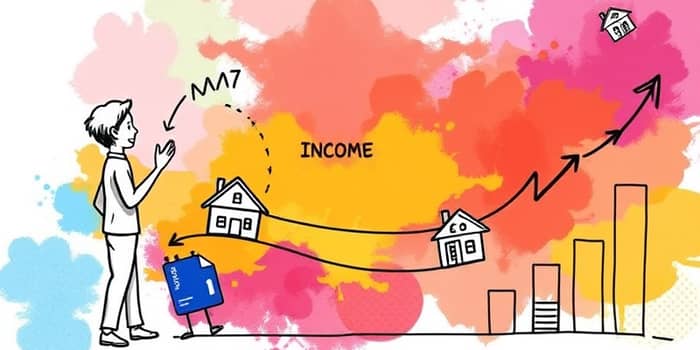
Imagine if your income could stretch like a rubber band, expanding to reach opportunities far beyond your paycheck.
This is the core idea behind the elasticity of earning, a powerful metaphor drawn from economics.
Just as income elasticity measures how demand changes with income, credit acts as a force that amplifies your financial reach.
It transforms limited cash flows into broader possibilities, from buying a home to investing in education.
In this article, we'll delve into how credit can boost your effective income and provide actionable steps to harness its power.
The Income-Credit Connection: More Than Just Numbers
Credit scores and income are closely linked, but their relationship is nuanced.
Higher incomes often correlate with better credit scores, but this isn't a direct cause-and-effect scenario.
Studies show a correlation coefficient of around 0.60, indicating a strong but not perfect link.
For instance, even low-income earners can achieve excellent credit through disciplined habits.
This underscores that financial behavior plays a crucial role in shaping your credit profile.
Consider how different income levels affect credit outcomes in the table below.
This table highlights that income alone doesn't determine credit health.
It's the financial habits, like timely payments, that truly stretch your earning potential.
How Credit Stretches Your Earnings
Credit boosts income through several key mechanisms that mimic economic elasticity.
Think of it as an income multiplier that allows you to leverage small gains into larger opportunities.
- Leverage for Consumption and Investment: Credit enables purchases that build wealth, such as homes or education, acting like luxury goods with high income elasticity.
- Access to Better Rates: Higher credit scores often lead to lower interest rates, making borrowing more affordable and effective.
- Behavioral Advantages: Consistent payment history and low credit utilization improve scores, regardless of income level.
- Life Cycle Effects: Building credit early can predict upward mobility, with habits formed in adulthood influencing long-term financial health.
- Inequality and Opportunity: Credit access varies, but disciplined use can help bridge gaps, offering a path to financial growth.
Each mechanism works together to create a flexible financial framework.
By understanding these, you can start to see credit as a tool for strategic expansion rather than just debt.
Building Your Credit for Maximum Elasticity
To harness the elasticity of earning, focus on practical steps to improve and maintain your credit.
Start by assessing your current credit score and identifying areas for improvement.
Here are essential actions to take:
- Make payments on time every month to build a strong payment history.
- Keep credit utilization below 30% to avoid negative impacts on your score.
- Monitor your credit reports regularly for errors or fraudulent activity.
- Diversify your credit mix with different types of accounts, like cards and loans.
- Avoid opening too many new accounts quickly, as this can lower your score temporarily.
These habits can help you achieve a higher credit score, unlocking better financial opportunities.
Remember, consistency is key; small, regular efforts yield significant long-term benefits.
The Role of Financial Habits in Elastic Earning
Your daily financial decisions directly influence how much credit can stretch your income.
Good habits, such as budgeting and saving, complement credit use to enhance earning elasticity.
- Budgeting: Track expenses to ensure you live within your means and can manage debt responsibly.
- Saving: Build an emergency fund to cover unexpected costs, reducing reliance on credit for crises.
- Investing: Use credit strategically for investments that generate returns, like education or business ventures.
- Debt Management: Maintain a healthy debt-to-income ratio to improve creditworthiness and borrowing capacity.
- Financial Education: Stay informed about credit terms and economic trends to make smarter decisions.
By integrating these practices, you create a solid foundation for financial resilience and growth.
This empowers you to use credit as a proactive tool rather than a reactive crutch.
Risks and Limitations of Credit Use
While credit can boost income, over-reliance or misuse poses significant risks.
It's crucial to approach credit with caution to avoid pitfalls that can shrink your earning potential.
- High-Interest Debt: Accumulating debt with high APRs can lead to financial strain, negating any income benefits.
- Poor Credit Habits: Late payments or maxing out credit cards can damage scores, limiting future access.
- Economic Downturns: During recessions, credit may become less available, highlighting the need for alternative strategies.
- Psychological Factors: Impulse spending fueled by credit can derail financial goals, requiring mindful consumption.
- Inequality Barriers: Systemic issues may limit credit access for some, emphasizing the importance of policy and personal advocacy.
Understanding these risks helps you use credit wisely, ensuring it remains a positive force in your financial journey.
Always balance credit use with savings and income growth to maintain stability.
Conclusion: Unlocking Your Financial Potential
The elasticity of earning concept reveals that credit is more than just a borrowing tool; it's a catalyst for financial expansion.
By leveraging credit thoughtfully, you can stretch your income to achieve dreams that once seemed out of reach.
Remember, success lies in combining credit with strong financial habits and awareness of risks.
Start today by reviewing your credit score and setting goals for improvement.
With persistence and smart strategies, you can transform your earning potential and build a more prosperous future.
Embrace the power of credit to create a life of greater opportunity and freedom.
References
- https://en.wikipedia.org/wiki/Income_elasticity_of_demand
- https://www.creditsesame.com/blog/featured-top-5/the-relationship-between-income-and-credit-score/
- https://www.economicshelp.org/microessays/equilibrium/income-elasticity-demand/
- https://www.youtube.com/watch?v=dc7ZQwv-xLQ
- https://www.americanexpress.com/en-us/credit-cards/credit-intel/credit-score-by-age-state/
- https://pressbooks.bccampus.ca/uvicecon103/chapter/4-4-elasticity-and-revenue/
- https://courses.lumenlearning.com/wm-microeconomics/chapter/income-elasticity-cross-price-elasticity-other-types-of-elasticities/
- https://consumerbankers.com/press-release/facts-matter-clearing-the-air-on-credit-card-rewards/
- http://www.econport.org/content/handbook/Elasticity/Income-Elasticity.html
- https://www.chicagofed.org/publications/chicago-fed-letter/2019/424
- https://www.mccrackenalliance.com/blog/income-elasticity-of-demand-why-your-customers-wallets-predict-your-future
- https://news.harvard.edu/gazette/story/2025/08/what-your-credit-score-says-about-how-where-you-were-raised/