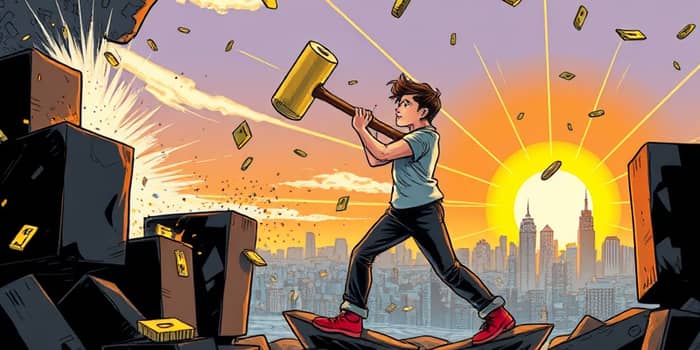
Every journey toward freedom begins with a single step. In the world of personal finance, that step often means confronting what many fear most: debt. Imagine standing at the base of a mountain of obligations—credit cards, student loans, medical bills—each threatening to bury your dreams under a relentless avalanche of interest and fees. Yet, armed with knowledge and a resilient mindset, you can transform that mountain into dust.
In this comprehensive guide, we will explore proven approaches, practical tools, and inspiring anecdotes designed to help you demolish your debts and build a brighter financial future. By the end, you’ll understand not only how to eliminate liabilities but how to foster habits that ensure long-lasting stability.
Understanding Debt Types and Impacts
Debt comes in many forms, each with its own risks and implications. From revolving credit cards to installment-based student loans, understanding the landscape is the first step toward effective repayment.
High-interest debts—especially credit cards with APRs often exceeding 15%—can grow rapidly. When left unchecked, they can trap you in a cycle of perpetual payments.
- Credit card balances with APRs of 10–20%+
- Federal and private student loans
- Auto loans and personal installment loans
- Medical bills and healthcare-related debts
- Short-term payday or signature loans
By recognizing which obligations carry the highest costs, you can prioritize effectively and avoid letting high-interest balances compound quickly.
Assessment and Personalized Planning
No two financial situations are identical. Creating a custom plan begins with a clear snapshot of your current obligations and cash flow.
Start by gathering statements for every debt. Note each balance, interest rate, and minimum payment. Then, create a detailed budget to pinpoint where you can free up extra funds—often as little as $20 to $200 per month can accelerate your payoff timeline significantly.
- List each debt with its balance, APR, and required payment
- Record monthly income and fixed expenses
- Identify discretionary spending to reduce or eliminate
- Allocate all extra dollars toward debt reduction
With this foundation, you’ll be ready to implement targeted strategies that amplify your progress. Remember to track every balance and rate to stay focused on your goals.
Debt Snowball Method
The Debt Snowball Method leverages the power of psychology by delivering quick wins. You begin by paying off the smallest balance first while maintaining minimum payments on all other accounts.
Steps:
1. Organize debts from smallest to largest balance. 2. Pay minimums on all accounts. 3. Direct any extra funds to the smallest debt until it’s eliminated. 4. Roll that payment into the next smallest balance. Repeat the process until you’re debt-free.
Pros:
- Builds confidence through rapid eliminations. - Encourages momentum and tangible victories.
Cons:
- May result in higher total interest paid over time if large, high-rate debts linger.
Example: Lindsey eliminated a $300 medical bill in just two months by applying her $200 monthly bonus payment. She then funneled that entire $200 plus her regular payment into the next balance, creating a powerful momentum.
Debt Avalanche Method
For those focused on minimizing long-term costs, the Debt Avalanche Method targets the highest interest rate debt first. You pay minimums on all accounts except the one with the steepest APR, to which you allocate extra funds.
Steps:
1. Rank debts by interest rate, highest to lowest. 2. Continue minimum payments on all but the highest-rate obligation. 3. Channel extra cash to that account until it’s cleared. 4. Move on to the next highest rate and repeat.
Pros:
- Offers the greatest savings in total interest paid. Great for large, high-rate balances.
Cons:
- Slower initial gratification; the first payoff may take 18–24 months.
Example: Jim redirected an extra $150 monthly toward his 19% APR credit card while maintaining all other minimums. In just over a year, he wiped out roughly $3,000 in high-interest debt.
Comparing the Snowball and Avalanche Methods
Choosing between momentum-driven motivation and cost-based efficiency depends on your personality and financial profile. The table below highlights key differences.
Advanced Consolidation and Loan Options
If juggling multiple payments feels overwhelming, consider consolidation or refinancing. A debt consolidation loan or personal installment loan can combine several balances into one with a lower, fixed rate and single monthly payment.
Balance transfers to cards offering 0% intro APR can also free up cash flow, though fees and time limits apply. Home equity loans or HELOCs leverage property equity for lower rates, while debt settlement negotiates lump sums at reduced balances—typically incurring 15–20% fees, so proceed with caution.
Before choosing any advanced option, review terms carefully and validate that fees won’t outweigh savings. Consulting a certified credit counselor can help you compare offers objectively.
Psychological and Practical Tips
Debt reduction is as much a mental game as a financial one. Cultivating resilience, consistency, and self-awareness will support you through every repayment milestone.
• Track your progress visually—charts or apps can illustrate how far you’ve come. • Celebrate micro-wins to maintain enthusiasm. • Avoid acquiring new debt by freezing credit cards or leaving them at home. • Automate payments to ensure small consistent payments and avoid late fees.
When motivation wanes, revisit your “why.” Whether it’s restoring peace of mind, saving for a home, or planning an adventure, keeping your purpose front and center fuels perseverance and confidence.
Long-Term Prevention and Building Resilience
Eliminating debt is an extraordinary achievement—but the journey doesn’t end there. Establishing robust safeguards will protect your newfound financial health.
Create a fully funded emergency fund covering three to six months of expenses. Maintain a flexible budget that adapts to income changes, and schedule quarterly reviews of your spending and savings. Use automatic transfers to retirement and savings accounts so you never omit the future from your plans.
Finally, reward yourself responsibly. A modest treat or experience to mark debt freedom can reinforce positive habits and serve as a reminder that disciplined choices yield lasting benefits.
By combining strategic repayment methods with strong financial habits and an inspired mindset, you can crush liabilities, reclaim control, and build a resilient foundation for everything you dream to achieve.
References
- https://dfpi.ca.gov/news/insights/three-steps-to-managing-and-getting-out-of-debt/
- https://www.navyfederal.org/makingcents/credit-debt/debt-repayment-strategies.html
- https://www.citizensbank.com/learning/what-is-the-debt-snowball-pay-down-method.aspx
- https://www.consumerfinance.gov/about-us/blog/how-reduce-your-debt/
- https://www.bairdwealth.com/insights/wealth-management-perspectives/2022/08/5-strategies-for-paying-off-credit-card-debt/
- https://consumer.ftc.gov/articles/how-get-out-debt
- https://www.militaryonesource.mil/resources/millife-guides/paying-off-debt/
- https://www.wellsfargo.com/goals-credit/smarter-credit/manage-your-debt/snowball-vs-avalanche-paydown/