As 2026 approaches, a startling 32% of Americans expect their personal finances to worsen, the highest level since 2018, casting a shadow of doubt over economic optimism.
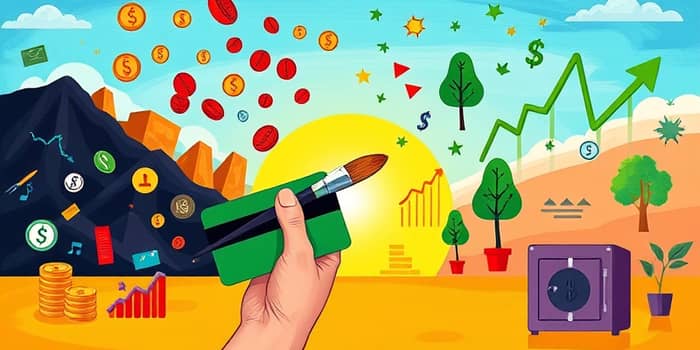
Yet, in this landscape of high debt and inflation pessimism, credit can serve as a powerful canvas for artistic financial planning.
Your credit is not just a number it is a tool waiting to be molded into a masterpiece of independence and security.
This article will guide you through the current struggles, offering hope and actionable steps to paint your path to financial freedom.
The Financial Burden We Face
Many feel weighed down by mounting debts and economic uncertainties, creating a sense of financial strain that seems inescapable.
Total U.S. household debt has soared to $18.33 trillion, with each consumer averaging $104,755, highlighting the pervasive nature of this burden.
- Credit card debt is a major culprit, with 46% of holders carrying balances and delinquency rates at 7.05%, above pre-pandemic levels.
- Auto loan defaults are accelerating, adding to the pressure on household budgets.
- Personal debt excluding mortgages affects 70% of Americans, averaging $21,500, primarily from credit cards.
Inflation remains a key driver, cited by 78% of those expecting worsening finances, as prices have risen 25% since 2020.
This data underscores the urgent need for strategic credit management to navigate these challenges effectively.
Navigating the 2026 Economic Landscape
The economic backdrop for 2026 includes inflation projected at 2.4% to 2.6%, still above the Federal Reserve's target, which continues to squeeze wallets.
Interest rates are expected to decline, with the Fed funds rate dropping to 2.75%-3.25% by December 2026, offering some relief for borrowers.
- Job market gains are slowing to 55,200 monthly, half of 2025's pace, impacting income stability.
- Housing prices are climbing despite lower mortgage rates, making homeownership a challenge for many.
- Americans believe they need $1.26 million for retirement, adding to long-term financial pressures.
Yet, within this gloom, opportunities exist, especially in credit markets, that can be harnessed for growth.
Painting Your Path to Financial Independence
To counter pessimism, 19% of people name paying down debt as their top goal for 2026, a prudent step toward financial health.
Others focus on building emergency savings or securing a higher-paying job, showing a diverse range of aspirations.
- 14% aim for a higher-paying job or additional income to bolster their financial standing.
- 13% prioritize building emergency savings as a buffer against unexpected expenses.
- 12% commit to better budgeting habits to gain control over their finances.
- 10% have no specific goals, with boomers being the highest in this category, indicating a need for motivation.
Positive changes are possible, with 47% citing rising income as a key factor in improvement, up from 35% previously.
Better spending habits and less debt are also cited by 40% and 37% respectively, reinforcing the power of simple resolutions.
Mastering the Art of Credit Management
Start by prioritizing high-interest debt, such as credit card balances, to reduce financial strain and free up resources.
Check and improve your credit score using free FICO or Experian reports, which are essential for accessing lower interest rates.
- Save while paying down debt by setting aside small amounts regularly, even during repayment phases.
- Set ambitious goals, like aiming for a higher income, to drive meaningful progress over time.
- Leverage community credit scores and financial wellness indexes to track and enhance your financial health.
In investment terms, consider opportunities in private credit or leveraged loans for diversification and income.
Credit markets offer unique avenues for growth, such as risk transfers that could double in five years, providing stability.
- Stress-test your portfolio to withstand economic shocks and avoid overcrowded investment trends.
- Favor experienced managers in private credit to navigate defaults and secure returns in sectors like leveraged finance.
- Explore emerging market high-yield bonds, where 30% of 2026 maturities are being refinanced or extended.
These strategies not only manage risk but also paint a brighter financial future through informed decisions.
Your Canvas Awaits
Embrace the idea that credit is your canvas, and you hold the brush to create a picture of financial freedom.
With 44% of people planning to tackle their main goal immediately as a New Year's resolution, now is the time to act.
Take control of your finances by starting small, whether it's paying off a credit card or opening a savings account.
Remember, 41% are setting larger, more ambitious goals for 2026, showing that hope and action can overcome pessimism.
As interest rates fall and opportunities in credit markets expand, use these tools to build a resilient and independent financial life.
Your journey toward freedom begins with a single stroke on this canvas, transforming debt into destiny and fear into fulfillment.
References
- https://www.bankrate.com/banking/financial-outlook-survey/
- https://www.axios.com/sponsored/5-financial-trends-you-can-bank-on-in-2026
- https://www.man.com/insights/2026-credit-outlook
- https://www.youtube.com/watch?v=xravYq8n6vQ
- https://www.experian.com/blogs/ask-experian/financial-trends-this-year/
- https://rfi.global/planning-for-2026-trends-us-financial-institutions-cant-afford-to-miss/
- https://www.northwesternmutual.com/life-and-money/simple-resolutions-to-unlock-your-financial-potential-in-2026/
- https://www.deloitte.com/us/en/insights/industry/financial-services/financial-services-industry-outlooks/banking-industry-outlook.html
- https://www.investmentnews.com/practice-management/ambitious-but-practical-how-americans-are-setting-their-2026-financial-goals/263679
- https://www.nerdwallet.com/finance/studies/2026-consumer-outlook-report
- https://operationhope.org/data-impact/financial-wellness-index/